Stoop Lauren is one of the most versatile voices of Atlanta’s new hip hop scene. An interview about the cultural force of Harlem, maturing as an artist, and finding one’s peace in passion, hard work, and team spirit.
By Katharina Moser, Windhoek
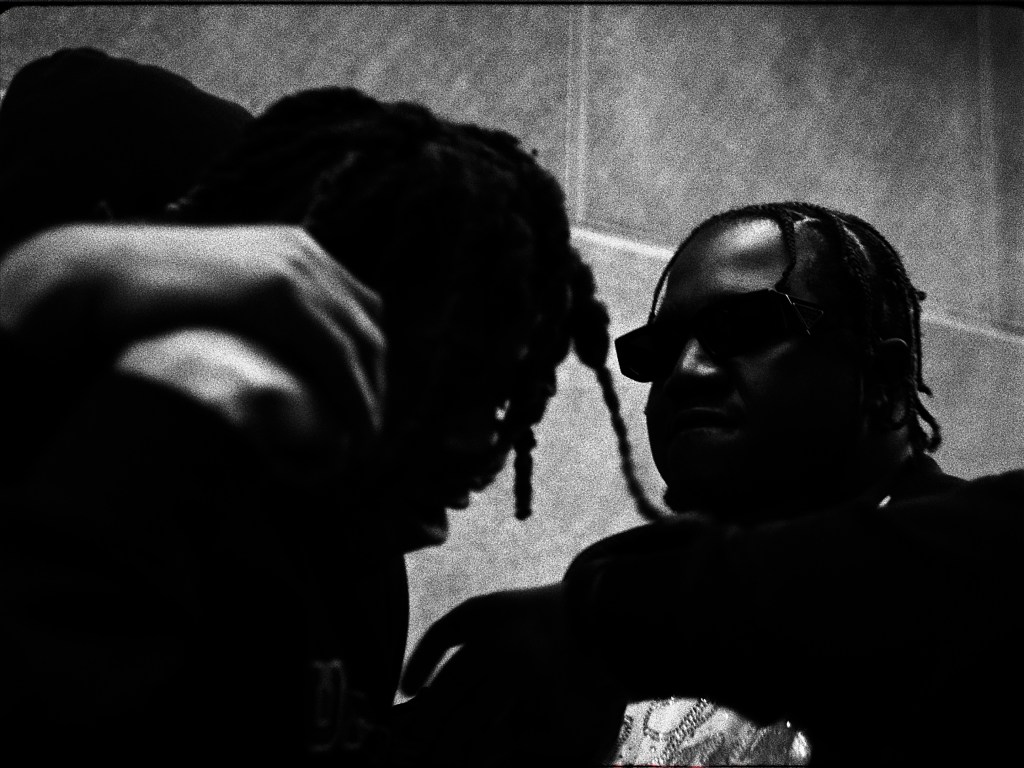
It is early evening in Northwest Atlanta and people are coming home from work, ready to escape the humid heat of Georgia’s early summer at the end of a long work day. But in Hills Park, where a spacious recording studio hides behind a black gate, the work has only just begun. It is full house in the studio on Woodmont Lane, and in between the buzz of artists, producers, friends and family – and a dog with a special interest in guests and their very chewable headphones – the one person we are here for is hard to overlook. Tall and with an inescapable air of calm kindness, Stoop Lauren navigates the busy hours at the studio like a king does his castle. After all, all these people are his friends and brothers, and the joyful yet tranquil energy of the space is built through a kinship forged by a shared passion: hip hop.
Since 2018, the Atlanta-based rapper has been steadily building a catalog that has certainly made waves throughout the city and beyond. Stoop debuted with “Monsta Oil”, followed by the albums “Off the Stoop” in 2021 and “Step Bros” two years later. The record “Villain” in 2025 cemented his status as one of the most versatile young rappers of his caliber, as did the EP “DYNØ” this year. Over these years, Stoop has collaborated with industry icons such as Childish Major or 808 Mafia. “I treat hip hop like a sport, so I’m always looking for ways to improve”, Stoop says. “You have to keep studying to figure out what you can do better, and what other people see when they look at you. Recently, I have matured in terms of listening and learning.”
Over the past months and years, Stoop has not only refined his craft, but also dedicated his time to personal growth. “The moments when you’re grinding, it feels like I’m doing it alone, it’s just me, like nobody else is here. I have matured to know that I have a team, I have people who want to work with me, people who care about me”, Stoop says. “And I have learned to be present in all of this, and then take it to that next place. Often I was so focused on the future that I wasn’t present at all. Now I take my time to take it all in.”
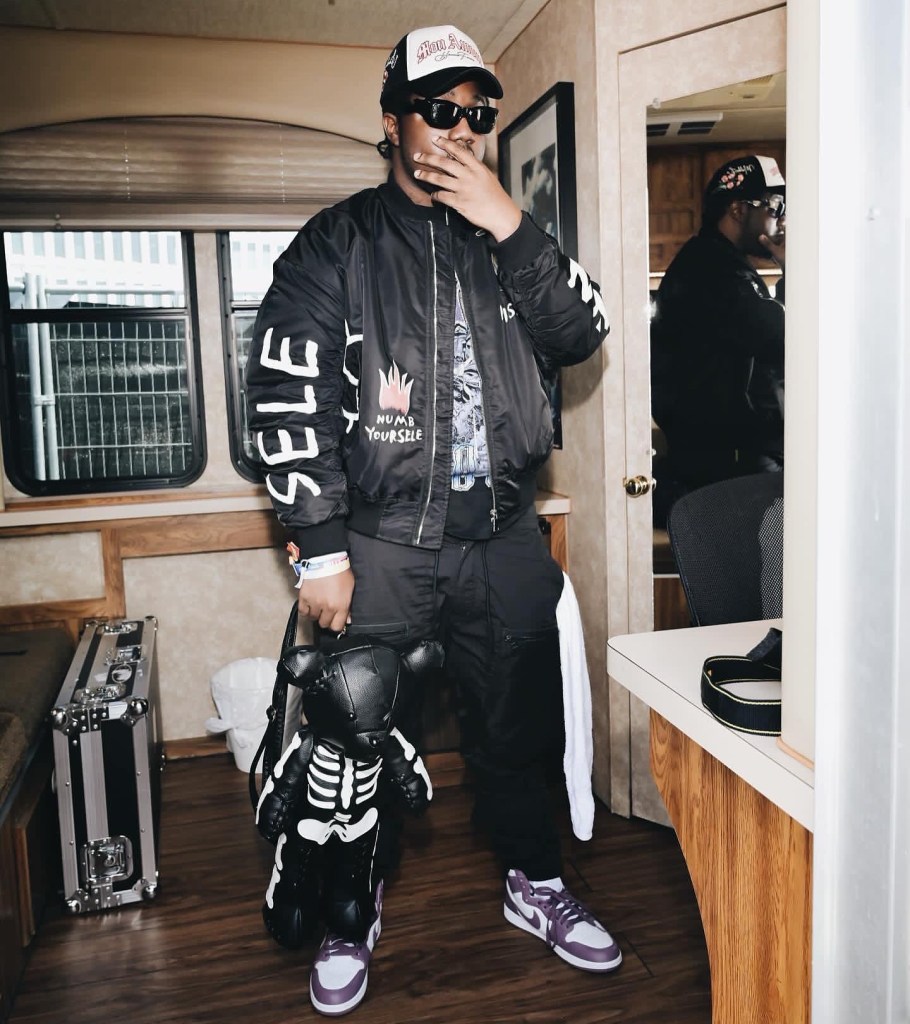
Of course, the New York-born artist is not new to the game, by far. Stoop was raised in a family of people who called the music industry their home, among them his father, who manages Ludacris. “They come from a lineage of working with artists and working in radio. That’s kind a part of my history too, growing up around artists and producers”, Stoop says. He remembers meeting huge industry names throughout his youth and career, like finding himself sitting next to Playboi Carti on a plane to Rolling Loud festival one day. Moments like these have provided him with inspiration to continue on his journey as an artist. “You gain a respect for it, an understanding of what they are doing and how they’ve done what they’ve done. It makes you just believe in yourself more. People like these are preaching that inspiration. Being around these artists, I felt I could do it too.”
Through his family background, music has been engrained in his identity and life outlook since he was a child. “Sometimes I wonder, would I be doing music if somebody had just dropped me off somewhere, off a spaceship? But I feel like I just naturally have a thing for music, so I probably would be doing it anyway. I couldn’t imagine it otherwise. Even if I had nothing, no hope, I probably would gravitate to a piano and just learn music. I feel like I was born for that shit.”
Despite his family’s success in the music industry, Stoop had to work hard for his success, and his childhood was not one of splendor, not at all. “Everything about me comes from a certain level of nurturing and care, but being Black, living in like Harlem, my parents weren’t rich coming up. I come from a certain level of poverty, but I was protected in a certain type of way so that it didn’t directly affect me if I was not looking for it”, Stoop recalls. “When you’re a kid, you just got that joy. You can go play in the park all day and not even know that your parents are going through it right now, that they’re not the best of friends, that they’re trying to figure their lives out”, he says. “I wasn’t born rich. But that shit gave me character. I haven’t been rich forever. I’m a real person, so those type of things, my experiences and my fights, made me who the fuck I am. That’s why I smile and act like nothing affects me, but I still have my own personal stuff going on. That’s the shit that makes me behind the veil.” But there were also people who molded him, taught him leadership, and enabled his education.
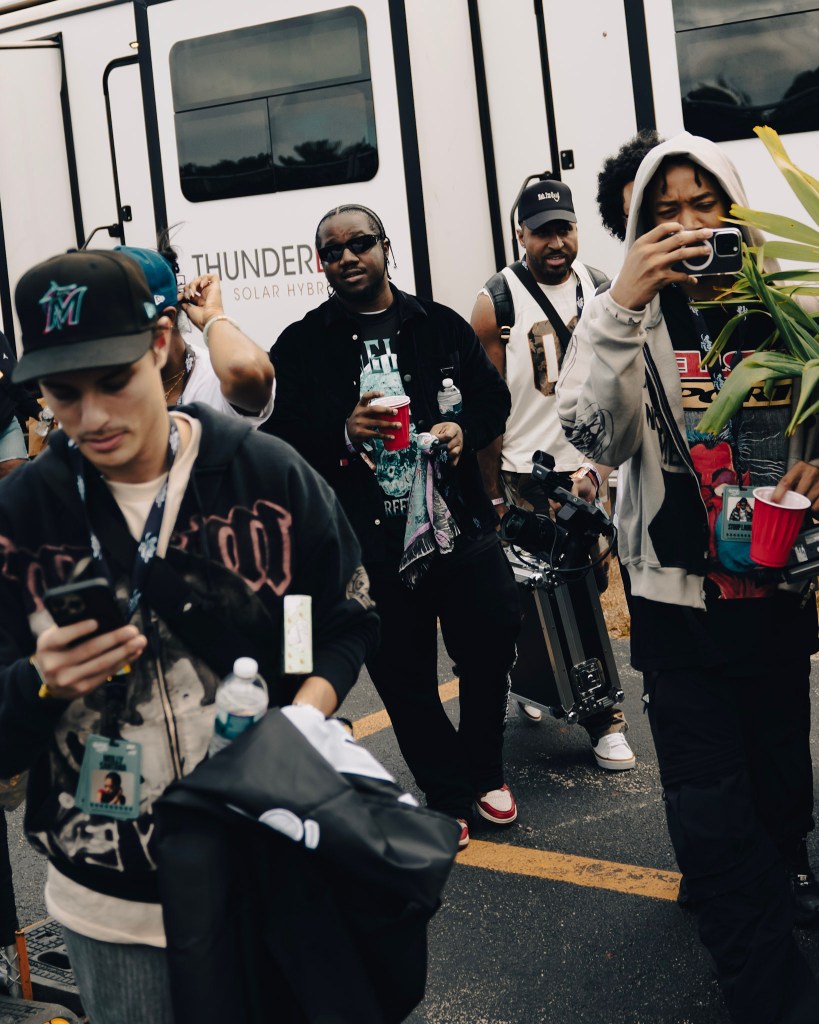
Of all the places Stoop has seen in his life, few have had as much of an impact on him as Harlem. “Harlem is one of the best places in the world. New York is. All the culture is here. You start learning about history, culture, people. So much great history has come from this place. And people are making money in New York. Living in New York will show you the difference between rich and poor”, Stoop says. “There are so many cultural things going on that you can tap into at any time, as long as your mind is there. That’s what New York does. New York creatively opens you up, and it gives you a certain type of hustle and energy. It makes you a go-getter. Being in New York will make you feel like you gotta be on your toes. Don’t be asleep behind the wheel.”
Since moving to Atlanta, Stoop has been perfecting the skills and styles New York has gifted him with. “If you listen to my tapes in order, you can hear the lyrical ability steps up, you hear the production improving. I take notes on myself. I’m observing myself. It’s weird. I observe myself in the doing of it, and know what I have to change.”
It was a particular moment a while back that opened his eyes and ears to the extent of which hip hop has become Stoop’s mission and purpose. “One day in college, I took an Adderall to study for a test. When I was done studying and I couldn’t sleep, I started to make beats with my cousin in our crib and I was rapping. As I was rapping, I noticed something that I had never noticed before. While I was rapping, I could feel the thought process and the emotions of everything I was thinking, as it was still connected to the rhyme and sound, perfectly joint together in my mind”, Stoop recalls. “I was rapping and simultaneously thinking about me rapping, in reflection while doing it, and it was the perfect flow state. The words were just coming together, and I wish I could have recorded the moment. It was something I’d never seen. I got up from my couch rapping and walked to the mirror and then I was looking at myself rapping. I was rapping literally for like six minutes, no beat, no nothing, just rapping, not even recording it. And then I was rapping for so long that I started tearing up. I couldn’t believe that I had that ability”, says Stoop. “We slept for two hours and then did the test, and it was just perfect. I’ve tapped into a similar energy a couple times after that, but never just like this. I realized then how much I loved this. There’s something about hip hop that I’m deeply connecting with. It’s starting to make sense. Since then, nobody can tell me nothing about nothing. This is it, rapping, making beats.”
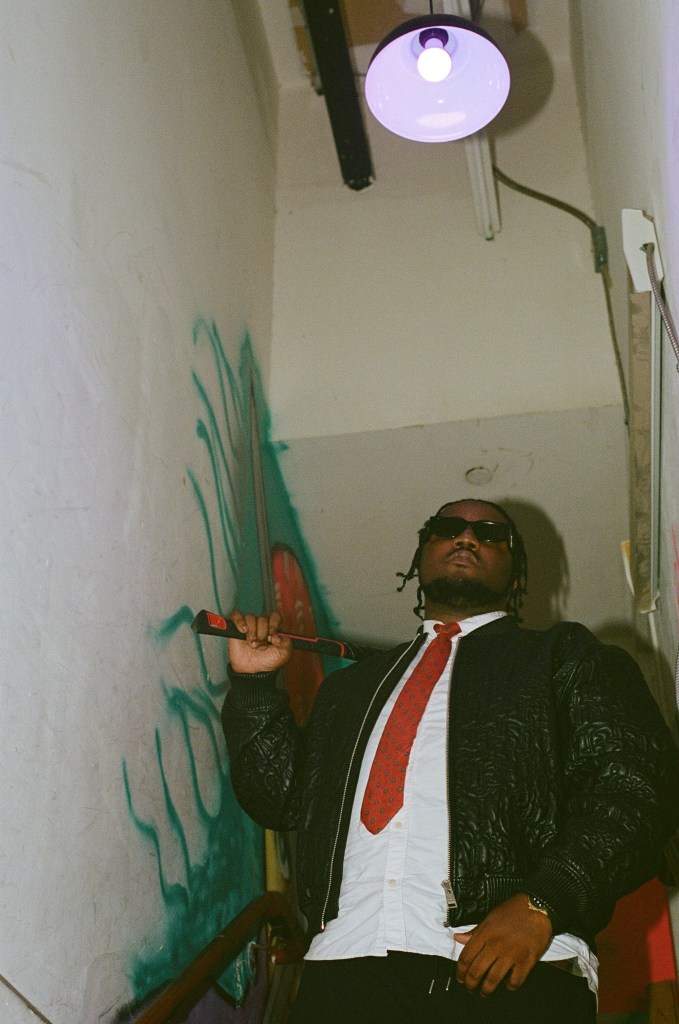
Stoop feels lucky to have found his passion, and to have the talent to follow it – something that does not come easily to everybody. “I tell people it’s cool to experiment in life with whatever you’re doing, just don’t kill yourself trying to find yourself”, Stoop says. “You gotta do different things, experiment on yourself, so you can see what’s for you and what’s not. But you can’t take certain risks. Some risks are too big to be just fucking around with your life. You got to experience things, and you got to have open-minded people around you who are going to have your back and are willing to check in with you. Make sure to have that support system, and then be willing to take yourself all the way to the to the edge to see how far you can push yourself. That’s going to show you what you’re made of. When the pressure’s on, it will show you that you’re meant for this. You’re gonna know if something is meant for you or it’s not, and that’s also something I want people to understand: If something feels wrong or not right enough, or people don’t feel right, leave instantly.”
Stoop has learned to put his well-being first, to take care of himself. “I’m making sure that I’m good emotionally and physically.” Only then, he says, he is capable of doing the same for others. “Life is a long game, it’s a marathon.” The key to mastering it, he finds, is taking breaks to breathe and heal. “Everybody goes through things. I just want to feel good doing what I love to do, and be a good person.” And he wants to use all the good energy around him to make more music. He has been working on a project called “With or Without” as well as a new chapter to his “Villain” series. “I have so many stories to tell. But mostly I see myself helping other people get their visions and dreams out, and really contributing to the making of hip hop, rap music, and R&B. It’s the most real music there is.”
Stoop smiles widely, ready to get back into the booth. “You might listen to my music and suddenly figure out something about life that you didn’t understand before. And I might take our interaction and learn from it, apply it to my life”, he ponders. “Your talent brings people to you. And what you’re saying attracts people who can resonate with that message. So put your voice out to people. Because it can change people’s lives.”

