Struggle Jennings talks his latest country album “Last Name”, the heavy weight of his family’s legacy, and the beauty of the home he is building.
By Katharina Moser
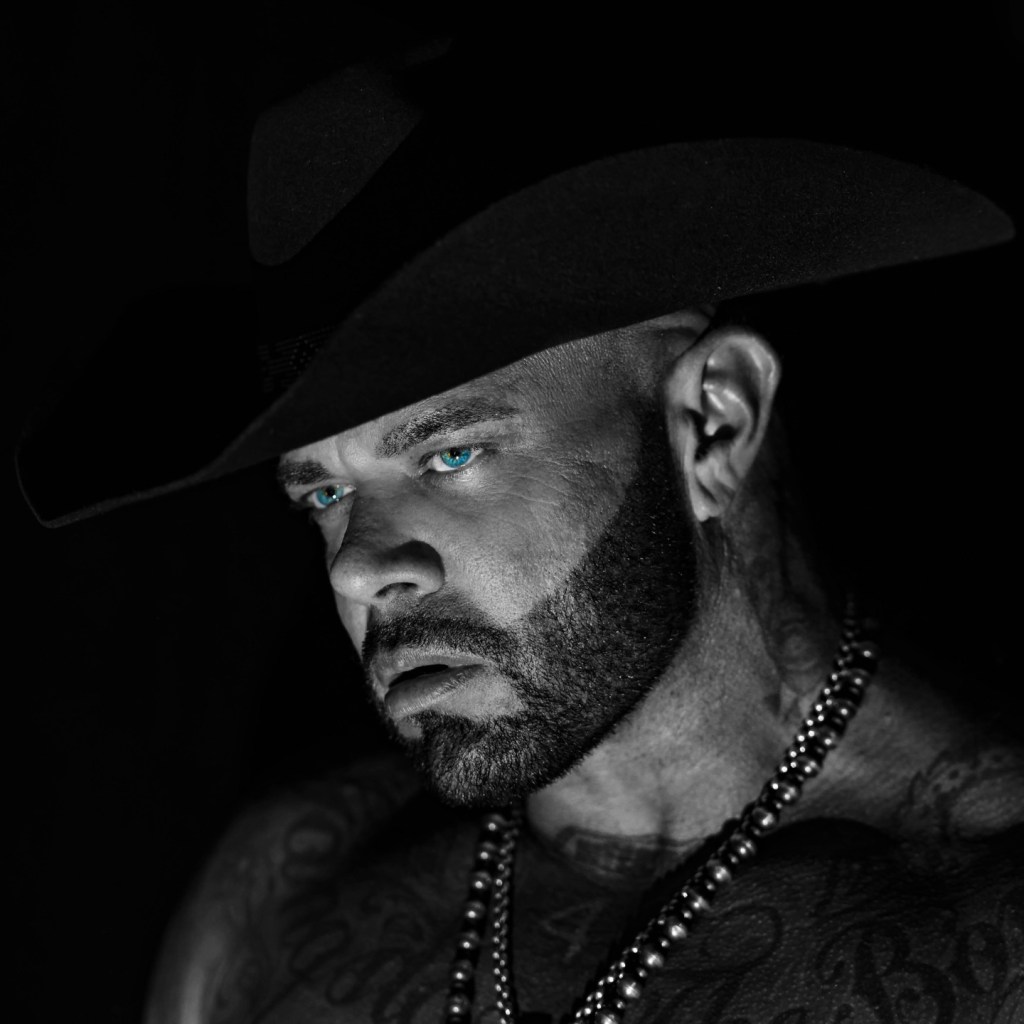
Struggle Jennings is a busy man. There is food to be cooked for his daughter’s gender reveal later today, he says with heartfelt pride, a moment he would not miss for the world. And then, of course, the next leg of his tour starts in less than 48 hours. Still, on this mild Nashville morning buzzing with early summer and anticipation and the laidback yet contagious joy of a man stepping into his purpose, the artist and family man takes his time to talk about the one thing that, other than his family, is closest to his heart: music, and his latest album.
Of course, this album is as much connected to his family and their significance as pretty much everything in Struggle Jennings’s quite extraordinary life. “Last Name”, released independently on March 13, is an album about family legacy – the weight of a shared history and the power to shape one’s own. The 13 tracks, all of which he co-wrote with songwriters Michael Whitworth, Jackson Nance, and David Ray, and produced by Ned Cameron, make up Struggle Jennings’s second full-blown country album after “El Camino” in 2024.
As the grandson of country musician Jessi Colter, step-grandson of Waylon Jennings and nephew of singer and producer Shooter Jennings, Struggle Jennings sure knows the weight of a last name heavy with history and meaning. However, Struggle is not just a Jennings, but also a Harness – after all, his father shaped his childhood as much as his grandfather did. The first verse on the eponymous song “Last Name” is a testament to the burden, the pride and the beauty that this name has entailed for as long as Struggle can remember: “I never told my daddy goodbye,” he sings on that song. “My dad was murdered when I was ten,” Struggle tells us now. “Earlier that day, I was outside playing football, and my mom called to me that dad was on the phone and wanted to speak to me. I said I would call him back when I was done playing football,” Struggle recalls. “When I came home that night, they told me he was no longer with us.”
For a long time, he says, everybody told him it was suicide. “For years, I battled with this pain. What if I had answered that phone that day? I thought I could have stopped him from killing himself if I had just talked to him. That weighed super heavy on me.” Only when he was older, Struggle found out that his father had actually been killed. By the time he was 15, his mother had lost custody of him as he was getting in trouble all the time, he says. He went to live with his uncle, his father’s brother, who lived in West Nashville, where they both were from. “Everybody knew my dad had been a hustler. My last name Harness meant something in those streets. My family was from that neighborhood, they were all tough guys, even though good people. There was this stigma to my last name, and I thought I had to follow that, which was one of the things that got me in a lot of trouble, trying to live up to that last name in the streets.”
“It is about stepping outside of those shadows and creating my own light.”
Struggle Jennings
Then, Struggle adopted the last name Jennings, from the grandfather who helped raise him, and started doing music. “It was the same thing, you know. There was this expectation of who I was supposed to be, because of who they thought Waylon Jennings was,” Struggle recalls. “When I was doing rap, they said that Waylon would be rolling over in his grave. That’s not true, they didn’t even know Waylon. Waylon loved rap. He loved all kinds of music. He was super versatile.” In that sense, the album is about the various journeys Struggle Jennings has been through with his last name – and, most importantly, about “stepping outside of those shadows and creating my own light,” he says. “It’s about breaking away from my dad’s name and those family curses, turning over a new leaf so that this same last name can mean something different for my sons.”
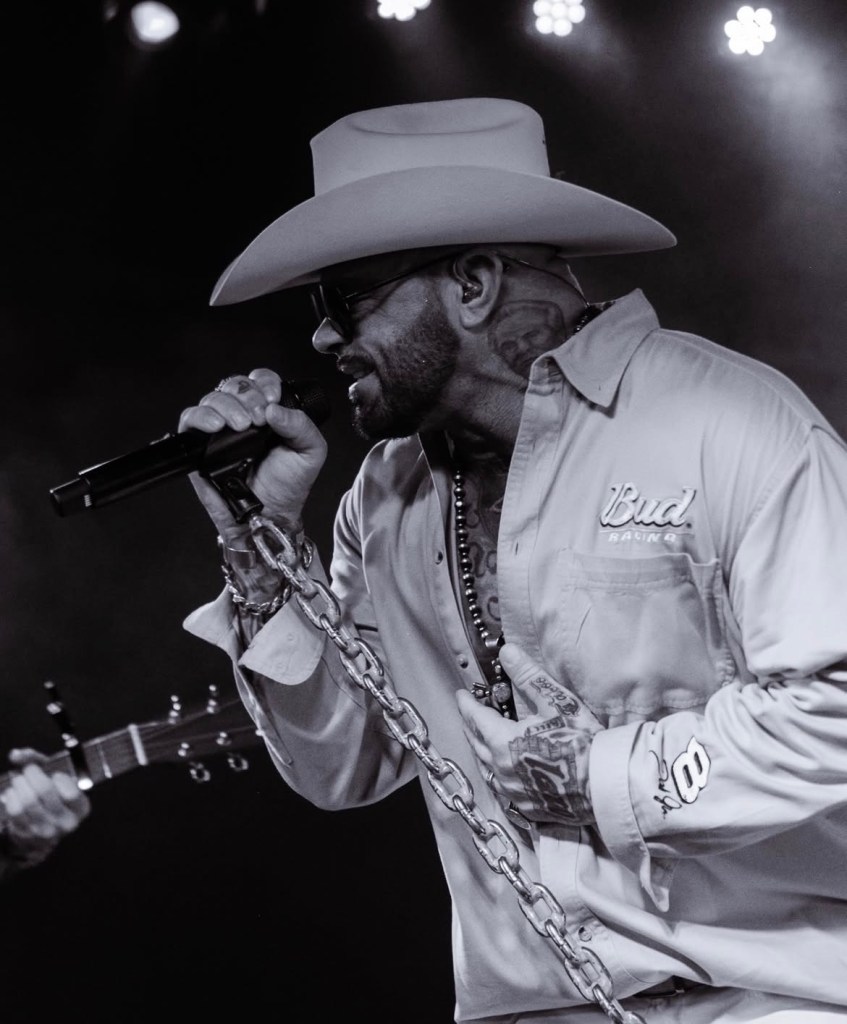
More than anything, the album “Last Name” is an album about family – about the love shared with the people that have shaped one’s path, and the freedom in choosing one’s own from there on. That, Struggle Jennings has witnessed during his concerts, appears to be hitting close to home for so many people out there. “All the shows on this tour have felt like a family affair. It’s felt like everybody in the room has been through some shit. They all gravitate and latch on to the music and to those songs to get through whatever they’re going through, because it feels good and real to them”, Struggle says. “You can see it in the crowd, you just see the connection, you see the love for the music, for the story, for me, for each other. The shows are really intimate, it’s like a family reunion.”
“Every morning you wake up you have an opportunity to write this next chapter. Your story isn’t over.”
Struggle Jennings
This is the one thing Struggle loves most about music – the truthful connection, and liberation through expression. “If I bottled up all this shit that I’ve been through, and all the things that go through my head on a daily basis, I would explode. But music is the outlet. And I think that’s why so many people connect with it, is because everybody needs that release, they need hope, they need to feel like they’re not alone as they’re going through what they’re going through.”
Struggle Jennings’s own life is a testimony to the power of the individual to change the course of their life, no matter the obstacles and hardships life has thrown in their way. In 2011, he received a five-year jail sentence for drug-related offenses. Now, a musician and family man on the straight and narrow, he goes back into state and federal prisons to tell his story and offer hope, inspiration, and motivation to the inmates who are now sitting in the very same chairs as he did back then, before finding his way out. “I want to let them know that your past does not define you. Every morning you wake up you have an opportunity to write this next chapter. Your story isn’t over.”
During one of his visits in prison, Struggle Jennings himself had an inspiring encounter that he keeps in the back of his mind every day, he says. As part of the program he is engaged in, he met the keynote speaker and three-times Wall Street Journal bestselling author Damon West. West, of course, had not always been a celebrity or college professor of criminal justice listed on Forbes’s recommended book list. At 20 years old, he was a Division 1 starting quarterback at the University of North Texas, when he suffered a career ending injury. He turned to hardcore drugs to cope with disappointments of life. A few years later while training to be a stockbroker, Damon got hooked on methamphetamines, and he became the mastermind of a burglary ring to support his addiction. In 2009, a jury in Dallas sentenced him to life in prison (65 years) for Engaging in Organized Crime – a RICO case. Only in prison, West became sober, went through a spiritual awakening, and was released on parole seven years later.
“You are in control of your life. Be like the coffee bean, change your environment.”
Struggle Jennings
Today, West is known for his Coffee Bean Theory, which Struggle Jennings swears by. “Imagine prison – and life in general – as a pot of boiling water. Now, let’s take three different things. Let’s take a carrot, let’s take an egg, and let’s take a coffee bean. You put the carrot in the boiling water. It goes in hard, but it’s softened by the environment. Then you put an egg in the water. It’s soft on the inside. Once you put it in the boiling water, it becomes hard, it’s hardened by its environment,” Struggle explains. “Now you put a coffee bean in. The bean turns the water into coffee, it changes its environment. And you got to be the coffee bean. Life can harden you, life can make you soft. But if you go in there and you exude that inspiration, that hope, and you do everything you can to change the environment around you – that’s something I’m just learning,” Struggle says.
“So now, instead of saying I’m a product of my environment, or I’m a product of what I’m going through today, of the hand I’ve been dealt, all these things that we like to justify ourselves with or use as a crutch – be the coffee bean! It all comes down to accountability. You need to realize that everything happens to you as a director, as the result of a decision you made, even if you don’t want to swallow that. If you search long enough, you can find a reason that you’re at fault and take full accountability. Then you have control – once I realize that whatever comes my way, I have the decision and the power to change the outcome, because I’m in control of my life. I may be in a shitty place right now, but I can change that. Just be the coffee bean, change the water, turn the water into coffee, change your environment.”
That is something Struggle wants to teach his kids, too. “I lost the mother of my kids to a drug overdose. I let my kids know that you have two options. You can follow in her path and you know the outcome already. Or you can take what you know and choose different. It’s what you do with what you’re dealt that defines the outcome,” he says. “We have to look at those obstacles as opportunities. They are another chance to learn something, to grow stronger. It comes down to finding a silver lining. I look back at life now, and every moment that I thought was traumatic in my life ended up being the biggest blessing. In hindsight, I needed that. It made me stronger. It taught me something important.”
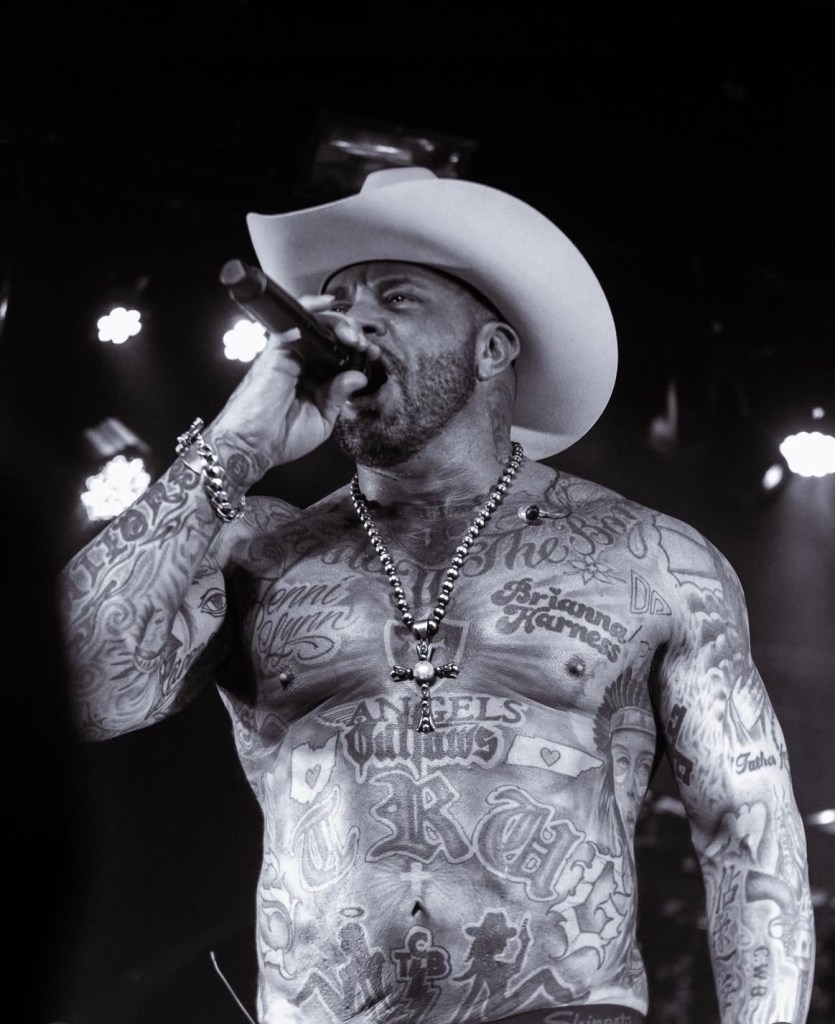
Since then, Struggle has learned to take accountability himself. “There were a lot of times back then that I may have been blaming my father for the decisions that I made. If anything, it helped me, and it molded me, and it gave me an opportunity to go through more and learn more and have a deeper understanding of what a father is and what a father should be.” In fact, the album “Last Name” dropped exactly ten years after Struggle got out of prison, and ten years after he dropped his first track in freedom, called “Like Father, Like Son”. “This timely coincidence is crazy. The first song I did coming home from prison was about me being like my father. And then then years later I’m dropping an album about my last name. It’s almost the same story, but with ten years of life in between.”
While Struggle Jennings has grappled with his last names in the past, he now knows exactly what power they hold. And he wants his children to know that, too. “Our family has been through some shit, and we’re survivors, we’re warriors. We can make it through anything, and I just want to show them that that’s possible. What people perceive as rock bottom is still a stepping stone. It’s still the first step to wherever else you want to go.”
“Don’t forget to dance with the girl that brought you to the party.”
Struggle Jennings
Struggle Jennings, of course, has long mastered the craft of building powerful pathways and journeys from a single step, no matter how shaky. After all, he has been a rapper for many years before he decided that country music was what he wanted to do, too. “I was super scared because I’ve been a rapper so long. Beginning to do country music felt like starting over as a musician. I knew not all my fans would like the country stuff, because they’re rap fans, right? My first country album ‘El Camino’ didn’t do that good. I was still finding my voice when I finished that album,” Struggle says with the humble honesty his friends and fans love him for. “I can sing all these songs better now, but I didn’t go back and change them, because I want the fans to hear the growth. I want them to be there for this whole journey,” he says. People were telling him that if he wanted to be taken seriously in country, he would have to leave rap alone, he recalls. But then a friend told him: “Struggle, don’t forget to dance with the girl that brought you to the party. The rap fans got you where you’re at, you can’t leave them. Do the country for you, because that’s where your heart is, and that’s what you’re feeling right now, but make sure that you still feed those rap fans, because that’s what they love out of you.”
As an artist, Struggle Jennings was at the crossroads: for popularity and fandom, commercial viability, reputation, the authenticity of an artist and the freedom of his unbounded and unlimited expression. And Struggle made his choice. “Of course, I want to grow. I want to be a bigger artist. I want to have a bigger stage, a bigger platform, to be able to reach more people with my message, but at what cost? If I’m supposed to be there, I’ll get there, but I’m not going to change who I am, and I’m not going to change what I love to get there, because then what was it even for? What is a man if he gains the whole world but loses his own soul?”
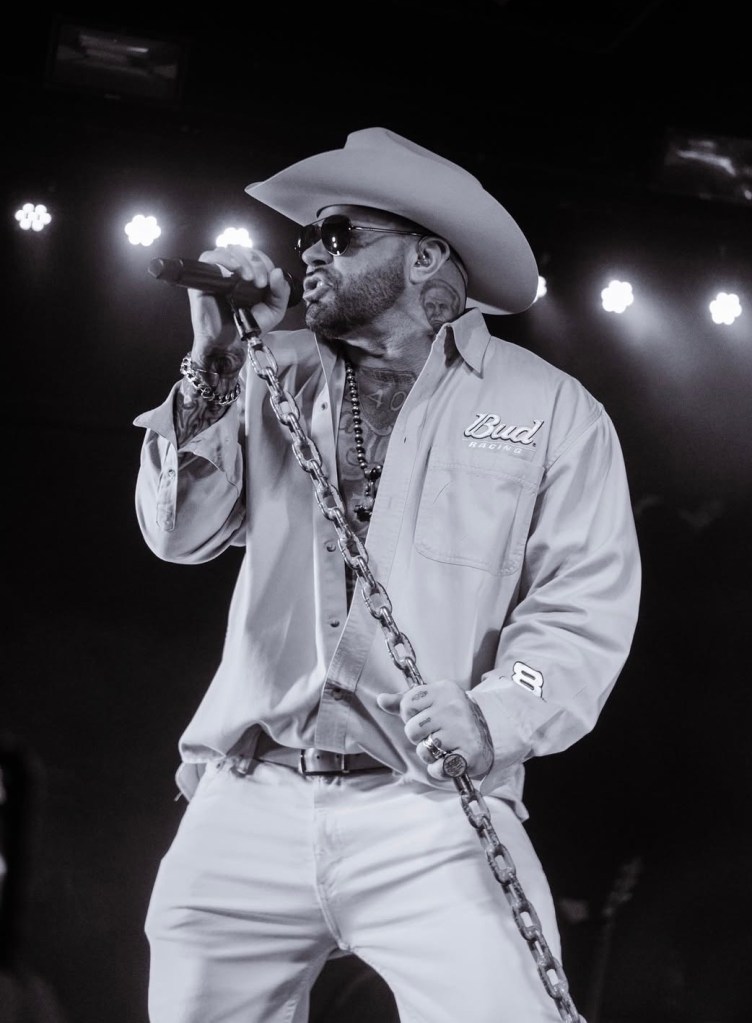
For Struggle, everything ultimately boiled down to one question: did he want to chase clout, or did he want to listen to the inner voice that called him to do art? “I love country music. I want to sing country music till I’m 95, but I can’t ever let go of the rap because I love rapping. So I just decided that every time I drop a country album, I’m gonna drop a rap album too,” announces Struggle, and grins widely. “No label will pick me up because of that. Radio probably won’t ever play me. But it’s okay, I’m doing this because I love to do this, and I’ve got fans to connect to. I want to make my music, and I want to be able to be here and raise my kids. The money will come, and opportunity will show its face when I’m supposed to have it. Right now, I’m just gonna keep making shit that’s real to me, and keep being me, and fuck everything else.”
After all, Struggle Jennings is an artist, first and foremost. “Listen, being an artist is not the business to get into if you’re just trying to get rich. Go do fucking real estate or some AI shit or some bitcoin, dude. Go do something else, because this isn’t for the faint. You have to want this, you have to love it. You have to want it so bad that there’s no other option for you, that there’s nothing else you could do that would make you happy.” And music is what Struggle will keep doing. “I’ve got four albums coming out this year. There was ‘Last Name’, then I have a rap album coming out, then another country album, then another rap album.” End of May, he will release an extended version of “Last Name”, adding six more songs.
And then, of course, there is his family, which always comes first. He has scheduled his tour, which will take him through the entire nation for the rest of the year, in a way that he spends as much time at home as he spends on the road. “I got a daughter graduating this year, I’m having another baby, and then I’m having two grandkids this year, as two of my daughters are becoming mothers,” he says with a wide smile that speaks of happiness, and pride, and gratitude. “I will make sure I will catch all of these moments, because I’ve missed so many already.”

