Florida rapper Clicklak speaks about growing up in Crime Hills, his friendship with Caskey, the moment that changed his life and the scar that reminds him of it
By Katharina Moser

When ClicKlak picks up the call around noon on an autumnal Wednesday, the narrow, yet thrilling confinement of the tubelike interior of a tour bus in the background, he is just enjoying a day off from the tightly packed tour schedule that has been his day-to-day life in the past weeks. Somewhere between Utah and Idaho, the Florida-born rap artist is taking nothing more than a minute break from stage before the final five tour stops of his 30-some concert row he is playing with fellow rapper and lifelong friend Caskey. “Meeting the fans and watching the ones that actually know the lyrics to the songs sing along with it – it’s probably my favorite part”, says ClicKlak. “It genuinely just makes me want to get in the studio and make some more music for them.”
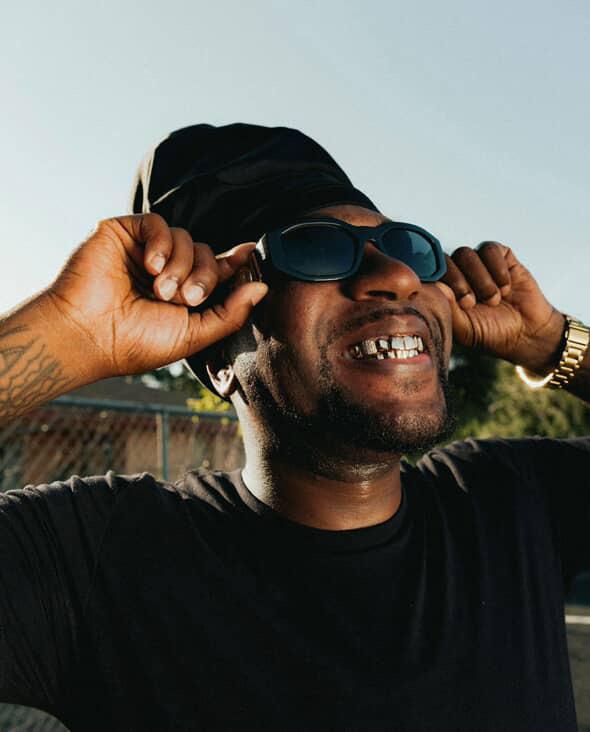
Fans have been flocking to venues all over America to see ClicKlak, with his trademark gold teeth blinking when he speaks, performing alongside Caskey what can only be called his very own style and sound of hip hop. Float music, he calls it – “it’s really light music”, Clicklak says. “A lot of rap music is a punch in the face. You feel like you have to turn it down to talk over it. I want people to be able to put my music in the background, almost like jazz, and be able to still have a conversation.”
In that sense, ClicKlak wants to fill what he perceives as a gap in hip hip, creating something that has been missing in rap sounds for a larger part of history – music that rap fans can grow old to, not grow out of. Hip hop, he says, is one of those sounds that many get tired of once they grow older, because they do not want their kids to hear it, or because it does not match what ClicKlak calls their daily life cycle. “My type of music goes across all age barriers. That’s really my true concern. I want people to be able to listen to me for the rest of their life. I don’t want them to stop. I want to be able to match all life situations, no matter what you’re doing. My main focus is to make sure my music can transcend and that people who grow up listening to my music can keep listening to it.”
Today, ClicKlak has five studio albums he calls his own, not the least his latest album “IZM” from July 2025. But it all started years ago in Pine Hills, a town of 60,000 souls west of Orlando, Florida, where ClicKlak – his friends call him “Pimpin” – grew up. Born in the American South, but to a family of Caribbean and British origins, ClicKlak cut his teeth on cultural diversity from the very beginning. “Every Saturday morning, when I was a kid, we had to clean the house and my mom would put music on, mostly R&B”, ClicKlak reminisces. After the family moved to Sanford, he started to rap at freestyles and battles in school. When the young artist began to take rapping seriously in his early 20s, he founded the label KPE – it stood for “Keep Pushing” – and rallied a group of rappers around him, among them Caskey.
While ClicKlak has maintained a close relationship with his family to this day, his upbringing was, at times, anything but cheerful. “When I was nine, my older cousin, who was one of my role models, was shot and killed in Orlando. It was a home invasion, and he was just in the driveway waiting to pick his girlfriend up when they came to rob the house, and they ended up shooting him”, ClicKlak says. “He drove home still alive with the bullets in him, and then ended up dying in the hospital. That was the first time I was ever introduced to death, and it was my first memory of losing a family member, especially to gun violence. I feel like it hardened me at a young age, and it shook me with a trauma that was followed by losing other family members after him”, ClicKlak recalls. Music, he said, helped him to find happiness again.
Pine Hills may have looked like a placid neighborhood from the outside, but it was not an easy place to grow up in, ClicKlak ponders. “It was nicknamed Crime Hills, as it was a bad neighborhood. I was forced into certain situations just based on what I thought I had to do. And as I got older, I realized I didn’t really need that”, he recalls. His position in Florida’s Crime Hills was also influenced by the way other kids viewed his Caribbean and British descent. “As I originally came from London, I had a British accent. A lot of the kids were ignorant and didn’t even think Black folks could come from England. It wasn’t something that they were even aware of. I was fighting every day because of it, trying to defend myself and my older brother, and it was tough.”
Only when the family moved to Sanford, just half an hour north of Pine Hills, things began to look up. In Sanford, he met 16-year-old Caskey, who had just lost his father to suicide. “We were able to build a bond, because we were both in a dark place at the time. We definitely needed each other’s friendship. And it ended up working out perfectly, because we both love to make music”, ClicKlak recalls meeting the Florida rap legend.
“I was able to talk about a lot of the things that happened to me through my music. If you listen to my old catalog, you hear that it’s a lot darker with darker beats, and it is more gangsta rap, because that’s what we were actually living like”, ClicKlak ponders. “We had a house that we used to sell drugs out of, and the studio was also in that same house. So we were able to make money and hang out and make music at the same time. That’s why my older music is so different from what I make now. I’m at a different point of my life today.”
Since then, ClicKlak has turned his life around – a transformation that becomes tangible in his music. And it just as much reflects in his friendship with Caskey, who, too, has put all his power and strength in overcoming the trauma, pains and mistakes of the past to build a life of happiness and art, like ClicKlak, and succeeded.
“So every time I look in the mirror, I see that scar – and it reminds me of that day. It’s a constant reminder to keep going and keep doing what I love, which is making music.”
Clicklak
ClicKlak remembers one very clear moment in his past that made him change his outlook on life, and decide to commit to change. “I had a cousin in Orlando, and I was trying to do some business with him at the time. But he put me in a bad situation. The transaction went bad and they shot the tires out of the car that we were in. And it was my cousin who set me up and looked me right in my eyes before he ran out the house and left me in the house with guns being pointed at me. It was hard for me to see him do that to me. It really changed me”, ClicKlak looks back. “That was my turning point where I realized, certain things just may not happen. I got a scar right down the middle of my forehead from somebody who pistol-whipped me during that situation. I was probably real close to losing my life that day, and I just realized that I would prefer to stay alive and make music.” And that was what ClicKlak did from that day onwards. “So every time I look in the mirror, I see that scar – and it reminds me of that day. It’s a constant reminder to keep going and keep doing what I love, which is making music.”
In that sense, hip hop, against all odds, has become a lifesaver for ClicKlak just like it has for his best friend Caskey. “If it wasn’t for music, I’d probably be dead or in jail, to be honest. It’s sad to say, but I wasn’t on the right path, and music definitely saved my life, man, because it took me out of the hood. We used to be stuck in that neighborhood, and now we are able to tour the whole country. It saved me.”
“I always make sure I am there for my kids. Because that’s what’s important.”
Clicklak
And ClicKlak has done it all to make this new life he is living worthwhile, even if the change did not come easy. Today, he has three children, two boys and one girl, who just turned four years old, as he tells us. “Having children definitely helped, because now I got people who are counting on me. I’ve never not been there for my kids. I’m not a deadbeat. I’m with them every day. I got them in private school. I tried to do everything that I missed out on growing up and tried very hard to make sure that they never have to go through anything that I went through”, ClicKlak emphasizes. “I tell people all the time, I’m raising squares, you know? I don’t want them to be no gangsters or nothing like that. My kids helped me get on the right path and stay on the straight and narrow. I always make sure I am there for them. Because that’s what’s important. I didn’t have a father growing up. So I always told myself I would do the total opposite.”
“If you have to choose between losing your life to the system or losing your life to somebody in the street, it isn’t a real choice”
Clicklak
Yet, some memories from earlier times still stay with him to this day. “I will never forget this one encounter I had with a younger kid when I was locked up in Georgia once” – when ClicKlak was 18 years old, he got pulled over for speeding on the way to New York, he tells us, with a little weed on him, and it took a moment for someone to come over from Florida and bond him out – “and he said something I had never heard before. This kid was younger than me and he was locked up for having a gun on him. I asked him, why would you be riding around with a firearm? At your age, you don’t look like you should be needing that”, ClicKlak remembers. “And this kid looked me in my face and told me, I’d rather be caught with it than without it. And at that time, that resonated with me, because back then I, too, would have rather taken the opportunity to save my life for having it with me than to lose my life for not having it with me”, ClicKlak describes the environment he moved in before rap changed his life. “It resonated with me that there are people in the world that have to live like this because they are afraid of losing their life. It’s a Catch-22, because people really aren’t supposed to have firearms on them if they are not licensed to. But if you have to choose between losing your life to the system or losing your life to somebody in the street, it isn’t a real choice”, ClicKlak ponders about that time.
Back then, many connected his stage name ClicKlak with the sound a gun makes, but in reality, it is the name a friend gave him because of his short temper. “He said to me, you are always clicking so fast, so he started calling me ClicKlak. But I grew out of that. Now I think my short fuse was just a reflection of my past traumas and me being too young to understand them. Today, when people ask me how I got the name, I tell them it’s like a woman’s heels – it’s the sound they make when she walks towards me.”
“I prefer to be speaking to the women, rather than about women in my music.”
CLicklak
Now that ClicKlak has grown out of a dark past that once used to offer the inspiration for his rap songs, he has to look for inspiration elsewhere. “Now I’m at a point in my life where I’m just gonna make what I’m comfortable with and what I think I sounds the best in a song.”
Much of his music, he says, is female-oriented. “I like to curate my music for women. A lot of times I’m speaking about experiences I’ve had with women in the past or in the present”, ClicKlak says. “I like to speak to women in my songs. Sometimes I also speak to men in regards to how they should treat women or approach women. In certain songs I’ll give men tips at the end of the song, because some men aren’t comfortable speaking to women. I prefer to be speaking to the women, rather than about women in my music.” In the end, he thinks, a positive approach to a relationship is largely a matter of confidence. “I do think my music can help some men, you know, the ones that ain’t got as much confidence as they could have. Women sometimes think that a man does not want to approach them, when really they are just scared of the rejection. So I try to talk them through that.”
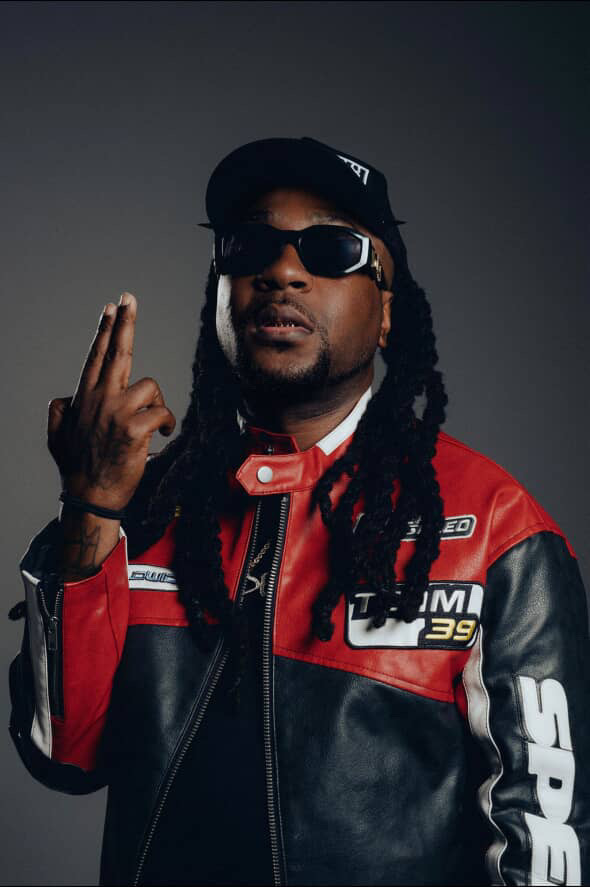
ClicKlak, with his laid-back, yet kind demeanor and artistic charisma, after weeks of touring together with his closest rap friends, certainly knows about the bonds forged between people when the connection is rooted in a shared past, a shared story of change, and a shared vision. And he wants his community to know that he, too, appreciates the proximity that is created through music. “I don’t smile much. So sometimes people think I’m not approachable. I just want people to know that, if you want to ask me anything, if you want to approach me, and I look mad, chances are I’m not. I just don’t smile much”, ClicKlak says. “I want people to understand that side of me. I don’t really talk much online either. I’m not the type to hold my phone, and I’m not big on social media. I want people to understand me and know me, without me having to do things online that I’m uncomfortable with. I’d rather speak to you.”
And he does – through his shows and his songs, of which there is more to come. “I want to write more music and work with other great artists that have a similar style like me”, he says. After all, ClicKlak lets his raps do the talking, and the crowd listens.
 The Wrapper