Art illustrator Kyro Wolf talks the tricks of designing an album cover, a lifelong search for truth and his very own great escape
By Katharina Moser

Some say, the truth is like the moon: you cannot always see it in its full light, but it is always there. And there are very few people who have come to stand for a life spent in search for truth as much as Kyro Wolf, a US art illustrator who has designed countless album covers for major artists – and who has quite the unusual life story to tell.
Kyro Wolf has been a graphic designer and art illustrator for well over two decades, contributing to how albums are being designed particularly in the hip hop industry with his works – among them nothing less than the famous Detox logo for Dr. Dre, a DVD design for Rihanna, several album covers for Bone Thugs-N-Harmony and many more. “I honed my craft during the mixtape era. In the late 90s and early 2000s I probably did close to 4000 mixtape covers”, Kyro Wolf says. “The style I offered up as a young designer was different from what most of my peers in design did, because I don’t come from a background of privilege.” His father a musician and his mother a painter, Kyro Wolf was raised around art from the start. His skills as an illustrator are, however, all self-taught. As he recalls, he started out designing at the age of 12 years when he visited his brother-in-law, a graphic designer himself, at his workplace and learned to use designing programs and tools on the company computers. As a teenager, then, many of his friends started making music, needed album covers – and Kyro Wolf plunged right in.
“Building a brand as a designer came easily to me, as I had always studied branding. When I was a child, I collected packaging. When I got a toy, I kept the box and studied it. I looked at the packaging of the special offers at McDonald’s. As a kid, when I looked at art, whether it was album covers or a French fries box, I analyzed what about it I liked. Sometimes I would stare at stuff for hours because I wanted to understand what exactly about it intrigued me”, Kyro Wolf reminisces. “That came naturally to me – knowing psychologically what appeals to people, what people respond to. And I incorporated that into my drawings. That is what core branding is: being able to tap into the social consciousness of what makes people respond.” To extract out of an artwork the element that fascinates, that captures the viewer’s attention has become Kyro’s key skill. “So many artists were way better than me in terms of design and technique, but their illustrations fell flat because they are missing the pop, they miss the icing on the cake. A cake may be the best cake you’ve ever tasted, but if there’s no icing, it’s not appealing. I was really good at doing the icing”, Kyro explains.

The need to tap into what appeals to people also means to be able to always relay to the tides of time, to catch up to the ever-changing trends and tastes in the music and art industry. What appeals to people twenty years ago is not what appeals to them today, Kyro agrees. “But there are certain key elements that are forever, just like a good song never goes out of style. Most commercial and trendy elements just float in and out. But there are certain human elements that remain of substance. If you look at trends over time, what remains a constant is always what is most organic. Things that have the most humanist in them. You can’t override the human experience, so that is what you have to connect to in your designs”, Kyro says. Successful illustrating and branding, then, are not about the technique, but about the experience, the conveyance of a feeling that people can always connect to.
The way Kyro Wolf approaches an album cover project is, it seems, somewhat unusual: he does not listen to the music he illustrates. “It’s a long-standing principle in my career that I don’t listen to my clients’ music. Because most of it is bad.” Kyro laughs. As a working designer, he does not have the luxury to only work with artists whose music he likes. “Every artist asks me what I think about their music, and if I say it’s horrible, they are offended and don’t want to spend their money on me. Early on in my career, I would be honest and say that their music is not something I like, and I would lose work because of that. Now, not listening to their music, I don’t have an opinion, I’m totally unbiased. Now I just hang out with the artist, see what they like, what vibe they want to give their project, and work with that.”
“One thing I have learned in my life is, you either evolve or you go extinct. You can choose to stand on your heels like an angry old man and die like a dinosaur. Or you can figure out what’s going on and try to evolve with it.”
While Kyro Wolf has built his very own legacy of art illustration, he sees his craft threatened by the latest developments in the music industry, as the concept of an album has long been losing its importance in a world of one-hit-wonders and streaming platforms, TikTok heroes and Instagram reels. “The significance of the album cover is pretty much dead. How people engage with music nowadays is way different than in the years I grew up. The album experience is dying. The album cover experience is changing. Album covers were one of the first things that started to lose monetary value in the music business. When I started, one cover was 100,000 dollars, then all of a sudden 20,000, then 10,000, then down to 5,000 and now you’re lucky if you get 500 dollars for an album cover. And that’s for known artists”, Kyro describes. He has observed that many of the newest album covers on Spotify are just iPhone images – without a concept, without a designer, without a real photographer. “That serves the purpose, but as a person who came from the art of album cover, and that being a big inspiration for my whole career, it is kind of depressing”, Kyro reflects. “This new trend is anti-art. And I’m anti- anti-art”, he laughs.
He fears that new AI tools will take over the purpose of an art illustrator, and render his profession obsolete. But that does not take away his optimism. “One thing I have learned in my life is, you either evolve or you go extinct. You can choose to stand on your heels like an angry old man and die like a dinosaur. Or you can figure out what’s going on and try to evolve with it. And I’m trying my best to evolve and not go extinct.” He smiles.
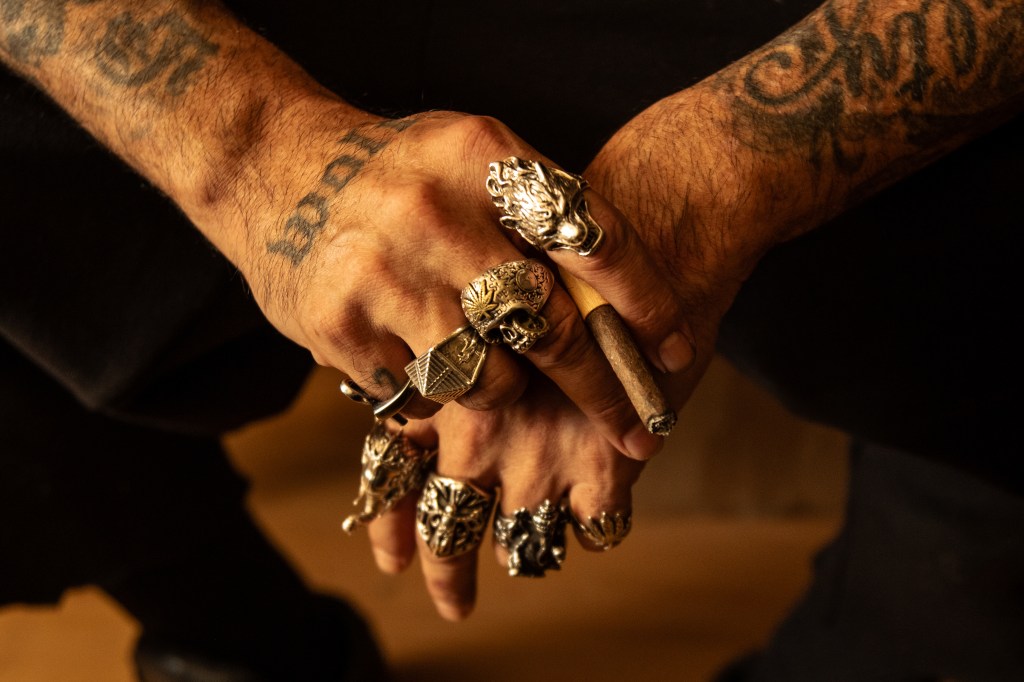
His reflective, thoughtful demeanor, the humble way in which he speaks of his own achievements, and the devotion to the artistic nature of his profession that distinguishes his craft are not only attributes Kyro Wolf has acquired throughout his career, but also hard-won fruits of a personal history both moving and unique to its core. His parents were involved in the hippie and Gypsie movement of the 60s and 70s. “In the 80s, when I was a small child, they got radicalized by Christianity and adopted the world view that the apocalypse was coming. They were convinced that the world was about to end, and there was no need for school or a career for me. I only went to school until I was ten years old”, Kyro recalls.
The family traveled around the country instead, lived in various communities of all kinds of ethnicities, class, or race. Born in Oklahoma, young Kyro soon found himself in California, Florida, Texas, North Carolina, or Tennessee, in a van with his parents. “I was a nomadic child. By the time I was 14, I was doing construction and roofing. According to my parents, the world was coming to an end and nothing mattered. So I was raised without the conception of even having a career”, Kyro describes the fundamentalist world view he was raised in. “This gave me an unhinged but also diverse world view because I was exposed to so much. We lived with Cuban people, with African people, in white, Mexican, and Black neighborhoods. I was just afloat and adrift in the midst of it all. As a teenager, I spent my time by putting on music and drawing pictures. While other kids were at school, I was listening to music and creating things”, Kyro recollects.
“In my work, you see the way I see things. All these individual pieces accumulate to who I am.”
If you think the world is going to end any day, you probably live very differently from when you are sure you still have 70 more years to go? “Absolutely. I made really poor choices based on the thought that I wasn’t gonna be here long enough for them to matter. Raised like that, you are not prepared to live life. To build a career, to raise a family, to manage life. And it wasn’t until my mid-20s that I realized, oh shit, I’m gonna be here for a while, and I have to start making better choices. It dawned on me then that all this was nonsense – and I had to re-strategize because I wasn’t prepared for the normal reality of life.” He chuckles sadly.
Growing up rootless, going wherever the wind blew them, also shaped Kyro creatively. “There is a Ying and Yang to everything. The way I was raised had benefits to me, especially as a creator. I had such an amount of freedom that most young people don’t have. I was exposed to so much that most people aren’t exposed to. One big problem of our society is that people don’t understand each other. But as a kid, I realized that whether you talk to a poor Black person or a poor white person or a poor Mexican person, they all have similar adversities and experiences. We think the same, we feel the same, we just do it in different accents. People are only scared of each other because of a lack of exposure.”
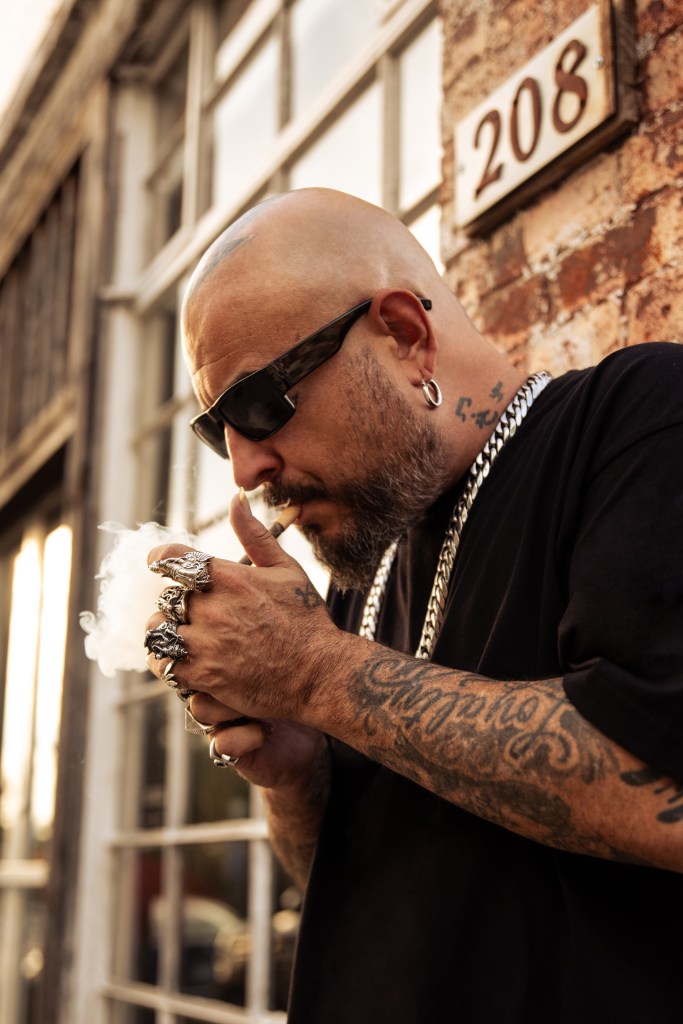
At the same time, the life his parents took him into brought him a lot of immense challenges and a lot of pain, too. “There was no stability. I didn’t always know where I was going to sleep that night. I didn’t always know if we were going to eat that day. There was no foundation. I didn’t grow up in one community or in a big family. I didn’t really know any of my cousins or relatives. I didn’t have any childhood friends. I don’t have those ties which people have, that make them feel grounded and secure and remind them who they are. It was literally me and my headphones. And this is why all this” – he gestures at the countless designs and drawings in his room – “became my life because this was all I had as a young person.” After escaping the confining world of fundamentalist Christianity, Kyro had to relearn how to live as a member of society, how to interact with his peers. “I did a lot of work to become, for lack of a better word, more human. Because I didn’t have a lot of basic social skills, not going to school and not being raised in a family setting. I didn’t know how to engage with society, at first”, Kyro describes. “I didn’t come from a culture. My culture is just a collection of things I experienced.” All of this also materializes in his art. “It’s ever-present in what I do. In my work, you see the way I see things. All these individual pieces accumulate to who I am.”
Only as a young adult, Kyro Wolf managed to escape this environment of religious brainwash, and find his own personal pathway of principles and ideas. In his early 20s, the realization came that all he knew about the world, the world view he was taught by his family, did not reflect reality at all – and all came crumbling down. When it slowly dawned on him that everything he ever believed in might be wrong, how did he feel about his family, who had engrained all these ideas in him? “There are stages to deconstruction. Anger and bitterness are the common first stage. You have this immediate feeling of having been lied to. This immediate sensation of all the things you missed out on, the tools you weren’t provided, the experiences you weren’t allowed to explore because of this wrong thinking”, Kyro says. “For example, I was taught that evolution was a lie and that scientists are evil and work for Satan. My education, especially around science, was so poor and misguided, and that was hard to deal with. But not just science – I was utterly unprepared to deal with reality. I was 20 years old and delusional. I would sit in the studio and argue about the apocalypse coming, and people thought that I was a crazy person. Understandably so. But I wasn’t disabled, I was miseducated. My thought made sense to me with my limited understanding.”
“That’s what I care about almost more than anything in the world: I want to believe as many true things as possible and not believe as many untrue things as possible. That’s a personal mission of mine.”
With the first horrible moment of realization came a moment of empowerment, and the beginning of a total commitment to finding the truth, to ridding oneself of all false assumptions, of poor teachings and fundamentalist guidance. “Now, I feel truth is paramount. I always want to deal with what’s true, whether I like it or not”, Kyro states. “As a kid, my parents told me that Santa Claus was a myth. I would argue with kids on the playground about Santa Claus. And I would be offended by the fact that all these parents told their kids Santa Claus was real, that they lied to them. What an awful betrayal of trust. Imagine, then, how I felt later about my upbringing. I don’t think my parents lied to me – they believed in what they said. But it felt like a betrayal of trust. It felt like being lied to. What pulled me through it was the constant look for the truth”, Kyro remembers. “But what I found going through life is that most people don’t care about what is true. People care about how something makes them feel. And people will always fall back to what feels right to them, what they identify with internally. But I care about what is true. I teach my children to question everything, that there is no authority that knows all. That’s what I care about almost more than anything in the world: I want to believe as many true things as possible and not believe as many untrue things as possible. That’s a personal mission of mine.”

Is that not an assumption in itself, to postulate that there is an absolute truth, after all? “A person might say that. But if their house is on fire, they’re going to run out of their house. They are not going to sit there and say it’s not real. Of course it’s real. Not everything is subjective. Maybe our reality isn’t real, but we have no way to prove that. And until you can prove that, I’m going to deal with reality as though it’s real, because it’s all I have. And I know that if my house is on fire, I’m going to take my family and my dogs and leave.”
Both not to care about what is true, or to postulate nothing is really true because all is subjective, then, might be a form of laziness – because taking the extra step of questioning one’s own beliefs can be exhausting, or hurtful. “It is scary. Encountering truth is scary. The truth can be terrifying. I’ve walked through some terrifying truth. And I’ve become a better person for it. We can’t get better if we don’t deal with truth. The biggest problem we face today is the fact that an enormous percentage of the population is just dedicated to nonsense.”
“Once you are able to divorce yourself from these poor teachings and ideas, you see that homophobia is no different than racism, it’s all the same hate rooted in ignorance and fear. It doesn’t thrive in the light.”
Everybody realizes once in a while that what they thought was a mistake. But as a young person to realize every single thing you thought you knew about the world is wrong, must be frightening? “It’s a scary feeling. I walked through that desert. But I’d do it again. I’d rather know a hard truth than a comfortable lie. A great many people are comfortable with lies. I know people who don’t believe in dinosaurs. That’s crazy to me. But how do you talk a person out of that? I don’t know. It’s part of their wall they have built up, and once you remove one brick, you have to remove other bricks, and people don’t want to do that. They get scared, because that makes you feel naked”, Kyro reflects. “I had to totally rebuild the foundation of my thinking, that was a weird, dark, scary, lonely time because there is no one to do that with you, no matter who you are. You have to walk through that internal deconstruction and rebuilding by yourself. Most of us are eternal children – we want to think that there is this grand being taking care of us. But if you start removing blocks, you realize that you are responsible for your own well-being, and it terrifies the shit out of most.”
It sounds, though, like Kyro has made peace with his past. “Absolutely. I’m no longer angry or bitter. There were several years after my deconstruction when I was very angry and frustrated and lost and not really sure how to put the puzzle pieces back together: I have children to feed and don’t really know how to make this work, and I don’t even know who I am right now. To navigate that internally alone is scary. But coming out of the desert, you realize that life is more beautiful than you ever thought it was. The time I spend now with people I care about is more special than I ever thought it was. I always make a point of letting the people I cherish know that I love them, and of absorbing these moments. Because they are all I have. I can’t think of any magical hereafter. Maybe there is one, maybe there is not. I don’t know. I don’t see how anyone could prove that. And until that, I have to deal with what’s in front of me. A beautiful family, great friends. All you can do is keep moving and appreciate the moments till they’re gone.”
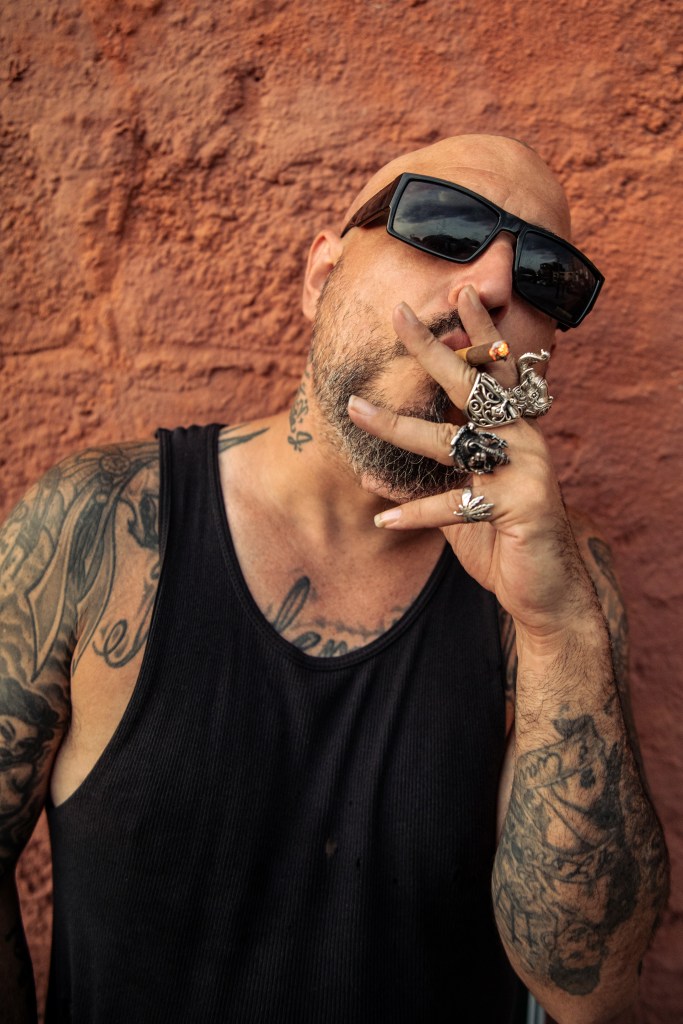
After a youth of extremist, fundamentalist Christian upbringing, what has remained of these religious beliefs? “I’m not religious at all. All I can see is that religion is destructive. What I have seen it do to people and society… Religions have communal benefits. A lot of times we had nowhere to go and churches would let us in. But all those social benefits are not exclusive to religion. You don’t need religion to be kind and to take care of people. Looking at world history, religion has been used as a force to arm and destroy people”, Kyro is convinced. “I personally witnessed the harm of religion. My cousin came out as homosexual and my uncle disowned him. He is not allowed at the house, not allowed to participate at family functions. That’s incredibly wicked and sad. I couldn’t imagine doing something like that to my children. So these religious concepts are poor. A lot of terrible things happening in the world are coming from ancient concepts that don’t make sense. If you want to convince me that something is true, show me proof that it is. Make it make sense.”
Kyro, now critical of any kind of intolerance in the name of a religious institution, should know what he is talking about – as he used to be one of those people himself. “As a young person, I was bigoted against gay people. Coming outside of that, I feel ashamed of those stupid trivial things that I thought back then, because of the world view I was given. The quality of a person’s character is all that really matters. Once you are able to divorce yourself from these poor teachings and ideas, you see that homophobia is no different than racism, it’s all the same hate rooted in ignorance and fear. It doesn’t thrive in the light.” One of Kyro Wolf’s children is part of the LGBTQ community, and he is glad he has revised his world view in time to show all his support for his kids. “I’m ashamed of what I thought back then, but I was also a victim of wrong teaching. I don’t think most people are inherently bad, they are inherently stupid, and people are subjected to bad ideas.”
“As a creator, there is nothing more powerful, satisfying, validating, than pulling something from your head into reality.”
In a world that is torn apart by so much controversy, hate, and intolerance, and at a time in the US where the trenches between groups and beliefs systems just seem to deepen every day, it is rare to encounter people who have managed to turn around their entire picture of self and of the world they live in, to deconstruct their inner world and put it back together according to their own principles, piece by piece. “I’ve met a few like me. There are some communities of exiles from religious backgrounds. We talk and have a space where we understand each other where no one else can. I have a good friend who escaped it before me. We talked for years, and he helped me to get out. Everything I brought to the table, he would dismantle.”
This friend was the one who would ultimately take out the one crucial brick in Kyro’s wall, who would say the pivotal words that made Kyro dare to look over and climb across. “His ultimate pitch was, if you think the bible is true, why haven’t you read it all? I had read the bible all the time, just not the entire thing. And he said, if you believe it’s God’s word, why have you not read every single page of it? I took it as a challenge. And I read it three times. I was halfway through the first time and I realized the near apocalypse was all bullshit. It blew my mind, my whole world just fell apart in that moment. This dear friend helped me to separate myself from the system of beliefs I was taught. And then after the separation, everything comes tumbling down, because then comes a time when you just question everything”, Kyro says. “That would be a pivotal, life-changing moment in my life. It led to the entire deconstruction and rebuilding of my self and my world view.”
Kyro Wolf’s story may be a powerful testament to the might of willpower, and to how far the search for the truth can carry you, if you take all the pain from a world tumbling down on you and turn it into glue for putting the puzzle pieces of yourself back together, and more so, to form a brand-new self of your very own creation. It is also a promise that Kyro Wolf is by far not done yet. “I have so many plans. It makes me sad that there is no way I can possibly accomplish all the ideas I have in my head. As a creator there is nothing more powerful, satisfying, validating, than pulling something from your head into reality”, Kyro says passionately. “Doing work for clients is one thing. But materializing your own thoughts – I don’t even care if anybody sees it. Being able to make it real is the most powerful experience. And I want to do more of that. I would like to exit commercial art and just work on my own passion projects – to pull all the things out of my head into reality.”
 The Wrapper