Rising country star CeCe Frey talks about her childhood on a farm, feminism in country and why people should never underestimate women
By Katharina Moser

A red blouse over tanned arms, leather chaps flying in the wind alongside a dappled-grey horse racing in full canter over the American prairie, and the atomic blond buzzcut against the stormy Western sky: that is CeCe Frey, the upcoming country singer from Illinois, in her music video “Cowboy Cry”. And it is the same bold buzzcut and radiant eyes that look inquiringly into the Berlin spring views just a weekend before her first show in Germany as part of the Country to Country festival in the German capital. “It’s unbelievable”, CeCe Frey says. “Just to be here and know that people are so excited to hear the music and party with us. I’m very excited.” CeCe Frey, with her unique singing voice and storytelling, has succeeded to tap into the country spirit that has been on a revival worldwide. “The quality of songwriting is an absolute staple for country music. I think that the way that songs are written specifically in country is very special. People are discovering that, even if they’re not from a dirt road in the middle of nowhere, in the south or in the west of America, they can relate to the same themes of the simple life being what is the most important, and that you can be happy with no money, even if your dog died and your girlfriend left. You can get on with your life and keep it moving. That’s why people anywhere can relate to country music so much”, CeCe is convinced.
The young artist has garnered increasing recognition for her music, not the least through the single “All Boots”, a catchy and just as witty bar room song that proved to be particularly successful on social media platforms. To make it in the industry and to her first show in Germany, she has come a long way, literally – from a farm in the middle of nowhere in Illinois. “I grew up in a town of 300 people in Southern Illinois. There was a gravel road running in front of my house. My dad was a farmer, and I spent the first ten years of my life running around barefoot on this farm. And I think that really gave me a very strong foundation in terms of being a hard worker in general. We all had jobs to do on the farm to help it run, even as kids”, CeCe recounts her childhood.

Yet, music has been with her from the very beginning. “I remember the moment it all started. I was five years old, and I sang at my kindergarten talent show. And ever since then, when somebody asked what I wanna be when I grow up, I always said the same thing, that I was going to be a singer. My first love was country music”, CeCe remembers, who sang at the Kentucky Opry when she was only seven years old. “Music has always been part of the story, and by thrusting myself into different scenarios with the music, whether it was performing or trying to write a certain song, all of those things are serving as the book of my life, of how this is all came to be. The music has been what has shaped me. Because every time I go in to write a new song, I’m forced to really look at my life and how I got from there to here. And I think that’s why it’s important, even if your dream is the hardest thing, to chase that thing because through those hardships, that mission will shape you.” Throughout her journey, she says, her family has always supported her.
Growing up living and working on a farm, it seems, CeCe has always had country in her heart. Helping her parents to work the land she grew up on, she knows what country is about in its core. She has been part of a life where cowboy boots and leather chaps are not fashion accessories, but instruments of hard work, in a place where country is not just consumed, but lived out. And it is this authenticity that people can hear when listening to the young woman’s strong voice singing of horses and cowgirls and country bar rooms and mud and dust. Yet, CeCe is the last one to lay any exclusionary claim on the meaning of the genre. “It is interesting how different elements, different people and different sounds become a part of the genre. Country music has changed sonically. It has evolved so much in the last ten years. There’s a lot of people who think that if you’re not from the country or from the south, that you shouldn’t be making this type of music. I don’t buy into any of that. I think you make whatever kind of art you want to make, and people will listen to it if they want to, or they won’t listen to it”, CeCe says. “The fans are smart, and they know what they like, and they know what’s authentic. So if what you’re singing is authentic, and it happens to be country even if you’re not from the country, that’s fine, and the fans will decide if they like it or not. All of these different flavors just make the genre more interesting.” For CeCe, country is not just about providence – it is about the emotional truth of storytelling. “One of my favorite artists is Chris Stapleton. Every time that man sings a note, you’re just in. And I could find out tomorrow that Chris Stapleton is from New York City and grew up in a high rise, and I would still think, damn”, CeCe laughs. “I don’t know where all that came from, but I believe you, and I’m in it, and I will listen to the music. So country is about this intangible connection that you just know when you hear it.”
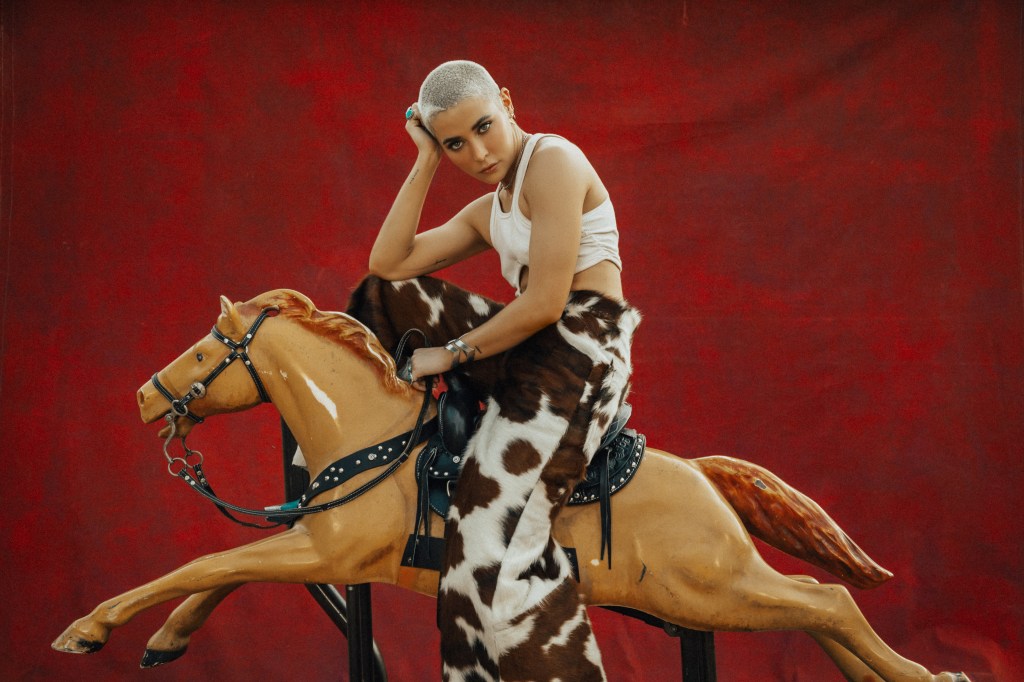
In 2012, CeCe made herself a name as a participant in the X Factor in the show’s second season, where she finished sixth place. Since then, she has been writing her own songs, moved to Los Angeles and marked her territory in music production, visuals and songwriting. Throughout the past years, CeCe’s journey has become the tale of a young woman pushing past all obstacles and challenges to follow her calling as an artist and chase her dream as an impactful female talent.
“It’s hard for everyone. But I do think that in particular, in most industries, it’s difficult for women. I want everyone to know that I have struggled. There have been times where I was down at my lowest point, thinking that it was never going to happen, that there was no way to make it to the top of this mountain. And you do come to the crossroads so many times, thinking I could keep pursuing this dream, or I could pursue a safer route with a more stable career. You think about it all the time, especially us as women – we are constant future planners. We’re thinking the big picture. How am I going to make this whole life work?”, CeCe says. “And the truth is, you choose your hard. It’s going to be hard no matter what, whether you’re pursuing your dream, or whether you are showing up for a nine-to-five that’s more stable but maybe not exactly what you wanted to do. Either you’re dealing with the hard of making it happen. Or you’re dealing with the hard of not doing what you want to do and not fulfilling your soul. This life is going to be hard no matter what, so we might as well choose to deal with all the hard stuff while we’re pursuing the things that make us the happiest.”
Her songs, as much as her charismatic appearance, give testimony to the strength and willpower CeCe embraces as a woman. Inspiring to many fellow female talents on the one hand, she had to listen to people calling her a “boss bitch” or worse in her career – an insult refering to strong, successful women in any industry. That does not, however, intimidate a woman like CeCe. “I think confident women are perceived as very scary. They scare men. They scare everybody. It is difficult for confident women to establish themselves and hold their ground. But when I hear the term boss bitch or boss girl, I think, sure, I’ll take that. Because at least maybe we can own it. We’ll own it, and we’ll make it our thing. Although no one would call a confident, successful man a boss boy”, CeCe argues. By standing up for herself, she wants to inspire other women to further emancipate themselves and hold their ground. “It’s not going to be shaving their head for everybody. Maybe it’s going to be standing up to that boss that is not treating you very well, or to that relationship that isn’t where it ought to be. For me, having my head shaved is the outward physical embodiment of that kind of courage.”

That courage, however, is something that CeCe had to learn and grow into first. “It’s always in development. Confidence is a roller coaster. There are days that I don’t feel great about myself at all, and there are times that I might seem confident when I really am not. Sometimes the whole ‘fake it till you make it’ really is true. It begins with believing in yourself.” That is also CeCe’s advice to other women establishing their confidence in a society where many would rather call a woman a “boss bitch” then celebrate her successes. “The kinder I am with myself, the more confident I am in every situation. The more forgiving I can be to myself, the easier it is for me to show up in any situation and just be my authentic self, and then that’s what is seen and felt as confidence.”
In that sense, her music, too, is a feminist venture. Not lastly her most successful song “All Boots” deals with a group of women that expose a cowboy as a fake. The song, essentially, is the story of a bunch of tough country girls knowing better what it means to be a cowboy than a man playing one, a man who is nothing but boots, no cowboy. Did she intend to give the whole cowboy narrative in country a feminist twist? “Absolutely”, CeCe says. The same goes for other of her songs, she says: “The video for ‘Cowboy Cry’ is starring this woman, Maddie, who is a cowgirl out in Wyoming. Working on cattle ranches and doing the things that she does – that’s not usually a job for women. It’s a very, very tough job. And I had just spent a week out there with her while we were shooting that video, and I watched her and all of her bad-ass girlfriends doing stuff that a lot of the cowboys couldn’t even do. And I thought, oh man, people really just underestimate women. So, so much. ‘Cowboy Cry’ tells this story.”
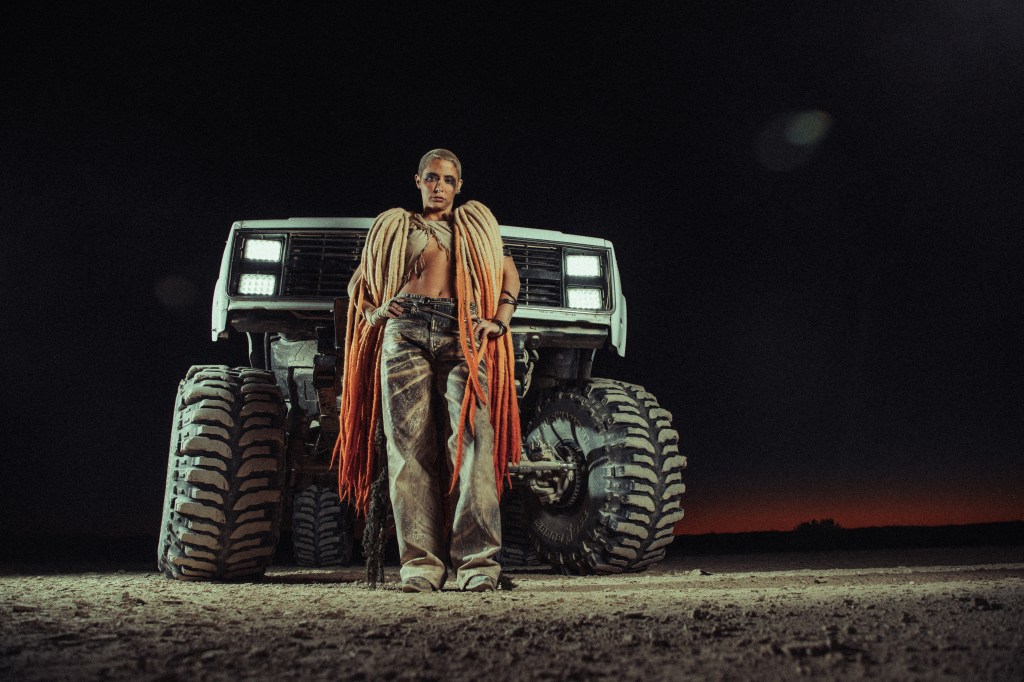
Through the lense of a woman and a feminist, CeCe certainly has a vision for country music and wants to push the genre ahead. “Women are subjected to a certain standard in country music. They say the higher the hair, the closer to God. Presenting this doll-like image for women to uphold is quintessentially country”, she criticizes. “There have been people that have broken the rules. I’m personally trying to push the genre forward.” While her voice and storytelling are very much country, CeCe likes to pull cadences and melodies from other styles and genres to generate a fusion of sounds. “The fusion is what’s going to bring country onto the next level.” For that, CeCe is playing more shows and is already working on a new album that is supposed to come out this year.
In that sense, CeCe’s music is an epitome for the potential which lies in country music made by women – their authenticity, their power, and their strength – and for the need of a different trajectory in country that casts women not merely as the cowboy’s love interest, but the main character – one that is more than just boots and a hat, one that is, in full embrace, a boss woman, a woman who is not held down by obstacles and never stops fighting and thriving. That, CeCe has learned as a little girl already, by the help of her family and the country that shaped them. “When I was young and we were on the farm, my dad came home with this little white horse one day that he had to rescue. It was doomed, so he brought it home, because I had always wanted one. It had never been broken. My dad had no idea how to work a horse, so we were just figuring it out together the whole time. We called him Dusty”, CeCe recounts with a smile. “I remember being on Dusty’s back one day, and he bucked me off, and I hit the ground, and my dad had to chase him down on his horse and bring him back. He said, all right, get back on. I said, hell no. And then my father said this: if you decide after today that you don’t ever want to ride again, you don’t have to. But you don’t give up when you’re afraid. And I got back on the horse. When I was done riding him that day, he said to me: You never quit on a low. Never quit on a failure. Never quit out of fear”, CeCe recalls and smiles. “They taught me this kind of courage in a lot of things. I used to sing the national anthem a lot growing up, at every basketball game, every town fair”, CeCe recalls. “And there were times I didn’t want to do it, even after I had agreed to do it, because I would be so nervous. And my parents said, if, after this one, you don’t ever want to do it again, you don’t have to, but you agreed to do it this time. So we need to get through this and then, if you want to quit, you can quit. But inevitably, every time, I would be so glad that I did it that I would always show up and do it again. You never quit out of fear.”
 The Wrapper