British rapper Jeshi speaks about his upcoming album “Airbag woke me up”, the chaos of life and breaking out of the shackles of what people want you to be
By Katharina Moser

A white shirt casually hanging over his shoulders, blue cap on black curls, and a gold tooth blinking conspiratorially in the soft afternoon light of January in Paris – that is Jeshi just a week before the release date of his new album, one which the hip hop world is anticipating anxiously after his debut album had already hit the industry like a bomb shell just two and a half years ago. Now, it is time for another masterpiece, as “Airbag woke me up” hits the shelf on Friday, January 24.
For the 29-year-old rapper from London, the new album is a significant step on his journey as an artist. “After doing the first album and its amazing reception, I had to figure out where to move from there. As a creative, I did not want to remake something I’ve already done. The question for me was, how you can take what you have done and build on it while doing something different? That can be hard, but it was an interesting process for me, one that I loved”, Jeshi says and smiles.
His critically acclaimed debut album “Universal Credit” is indeed hard to top: Named an “era-defining album” by the Guardian, it is a smart, gritty, truthful and sonically refreshing work of social commentary, bearing witness to working class disenfranchisement under British austerity and the social disconnect of the wealthy from the struggles and hardships of the people carrying society on their shoulders. But Jeshi took up the challenge, and succeeded. Refreshing in sound and insightful as much as it is personal in its lyrics, “Airbag woke me up” sounds like Jeshi’s graduation to the masterclass of hip hop, a full embrace of the potential of the genre and his role in it. “My first album started just as personal as this one did. It became political through the way the fans were able to relate to it. For me, it’s always about speaking my truth, speaking about things I’m going through, things I’m feeling, which is exactly what I’m doing on the new album”, Jeshi says. “I think this album looks more inwards, rather than looking out into the world. That signifies the big shift.”

The title of the album refers to a car accident he and his friends experienced as teenagers, when Jeshi crashed into a parked car on his way home from a party. He and his friends snoozed in his car overnight, and on their way home in the morning, Jeshi fell back into sleep, only to be woken up by the airbag deploying in his face. “This really is a metaphor for any of the bad things in life, whether it’s a car crash or whether it’s your childhood or whether it’s things you went through as a young adult. Such things can be an awakening for you, something that wakes you up and jolts you into a new chapter in life. And this is exactly what this album now is.”
Despite the power and integrity of his earlier political songs, Jeshi does not want to be boxed in as a political rapper. “When you do something, people think that is you as an entirety, when really it is just one part of you”, Jeshi ponders. “I think it is important, as hard as it is sometimes, to break out of those shackles of what people want you to be. Being a rapper means a lot of pressure in that regard. Taylor Swift doesn’t have the pressure to do social commentary. It’s something that really only rap artists have put onto them, which is good, because I think it is incredibly important to speak about the world and what’s going on in it. But I don’t think that we as rappers should be victims to that and feel like we have to fit into this mold. What I was talking about on my first album is just as personal to me as what I talk about in the new one.”
And it does get personal on the new album, an intricate compilation of thoughtful, ponderous, at times sorrowful, sometimes dark, then defiant songs. “I want people to be able to relate to it, all these people who feel like me – young people trying to figure life out. Sometimes you can feel like you’re very alone, like life is just running in circles, you’re not in control, and then again, sometimes you feel like on top of the world. The album deals with this contrast a lot, with not knowing where you stand. I wanted that album to feel like a roller coaster. You have these moments of pure chaos, in one moment it’s super over the top, and then there’s these moments of real introspection. That’s an accurate portrayal of my head and an accurate portrayal of what life is like.”

Jeshi’s music is a look inwards, an introspection of the mind and soul of young people faced not only with the chaos this world has to offer, but also the chaos within themselves. A chaos, the album shows, that is hurtful and beautiful at the same time. “I feel like every day is chaos: It’s about learning in your brain how to ride those waves the best you can. None of us have the answers. I don’t have the answers to nullify the chaos. But figuring all that out is what the new album is about.” The massive success of his debut album is not entirely innocent of the chaos and confusion that Jeshi has experienced. “Off the back of the first album doing so well, sometimes you feel even more confused. You’re doing all this great stuff, going around doing all these shows. And then some days you wake up and you wonder, why don’t I feel as good as maybe I should feel? And then other days, you feel on top of the world. It’s just human. It’s a confusing world we live in.” That chaos is also reflected in the multiple sounds and sonic diversity the album has to offer. “What makes the album cohesive is not that it all sounds the same, but the intent and thought process behind it. I try to take all of these mad elements, the equivalent of good days and bad days, and put them into one, because that is what life is.”
As much as “Airbag woke me up” is a triumphant piece of hip hop, its sound is somber, a little dark, a little sad for the most part. Jeshi ponders for a moment. “I think as humans, we all are little bit broken. And like most people, I feel low sometimes. I feel great sometimes too. But in order to understand how I feel, and to make it resonate with other people, it feels much more beneficial to get across those exact moments when I am feeling low and put that into music, rather than making a song about me having the best day ever. Happiness does not contribute as much, does not inspire me as much, and I don’t think it does much for other people either. It’s about shedding light on the bad parts of ourself, trying to illuminate that, and through this, turn it into something good.”

His integrity and down-to-earth personality paired with the desire to create art that is meaningful to the people around him make it all the better for his fans to connect to his music. “I live a very normal life. I go to the same pubs as these people who listen to my music. I see fans outside all the time. I’m in the same places. I’m into the same stuff. I don’t really have any intention of removing myself a million miles away from that”, Jeshi says. “I don’t want to live in a bubble. I want to be in reality, living the same life that other young people are living, because I think it’s important for who you are as a person to be on the ground, no matter how high up you are.”
His outlook on life is, not least, shaped by the way he grew up and the environment that formed him. “London can be pretty fucked up. People die, and people get in a lot of trouble. I did not have the hardest life. But I had to navigate all of this and try to be the best person I can. All of these experiences in my youth shaped me and made me who I am. That is not to say that it should be used as an excuse. I think these things actually make you a stronger person.” Jeshi began making his own music in the age of MySpace, the social platform that had its peak of success in the 2000s. “The first time I started out doing music I was a really young kid. It just really blew my mind how in control you could be. MySpace was one of the first tools where you could upload your own music. Kids at school could listen to it, and that alone fascinated me, that you didn’t need money, you didn’t need to know anyone in the music industry. You didn’t need nothing. So around kids who were coming up with nothing, it felt really appealing that you could take control of your own destiny and your own life like that”, Jeshi recalls. “And as soon as I started doing music, I just really fell in love with it. I love words and I love writing music. And then as I got older, I fell in love with the idea of how it connects with people, and how it feels much bigger than just being about yourself.”
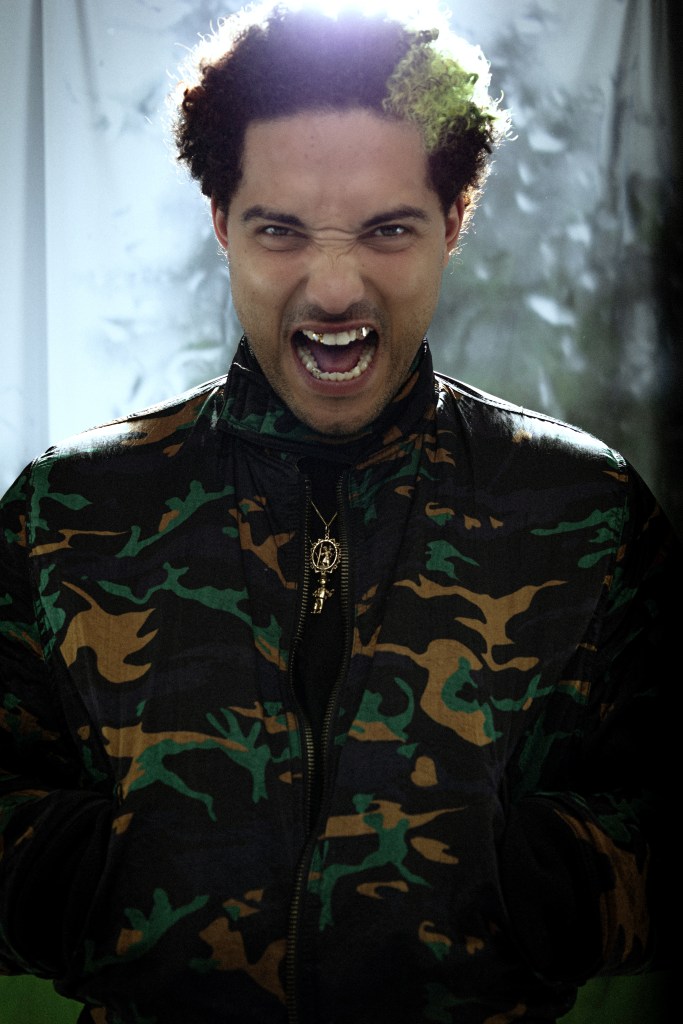
Just like his entrance into music, his debut album tells a story of making something out of nothing, of creating art and opportunity out of thin air, with nothing but the heart of an artist, the mind of a lyricist and something to say. “For me, the most important thing is turning unideal situations into great situations. That is also the story of my first album, telling the story of staying at home, being on benefits and not having anything going right for me, and turning that into an album that connects with loads of people and gave my life lots of meaning and also gave other people’s lives meaning.”
The uniqueness, originality and authenticity of his thought and sound seem to have the potential not just to unravel his personal life and the lives of his fans, but also to bring new life to British hip hop on the international stage. In the midst of highly talented British rap artists that have been redefining and expanding the scene in the past years, Jeshi is convinced that his music can help contribute to further push British rap towards the international epicenter of attention. “There are many US rappers pushing an alternative sound in America on a really big level. And while there are so many people doing amazing forward-thinking rap in the UK too, none of that has reached that level. And I think that’s what the next wave is. I would love to be a part of opening the conversation about what British rap can sound like. Right now, the world only sees a small part of it, and I want to take them to the ocean.”
With that in mind, Jeshi wants to keep creating more music. After the album release on 24 January and the subsequent tour through Europe, he wants to get right back to work and let himself be inspired by the chaos of life. “I look inward a lot, on how I’m feeling on a day-to-day basis. Family is inspiring. Pressures of life are inspiring. Making music is a complete escape. I can be having the worst time ever, but there’s nothing on earth that gives me more joy than creating”, Jeshi says. “This moment of creating is something that will always keep me going and keep me inspired, just because it just means so much to me.” Jeshi smiles widely, absently spinning a paper crown in his hands that had been sitting on his desk, then putting it on his head. The future king of British rap in the making, ready for the crowning.
 The Wrapper