Struggle Jennings talks his new country music projects, playing the stage of the Grand Ole Opry, his friendship with Jelly Roll and the power of change and transformation in life
By Katharina Moser
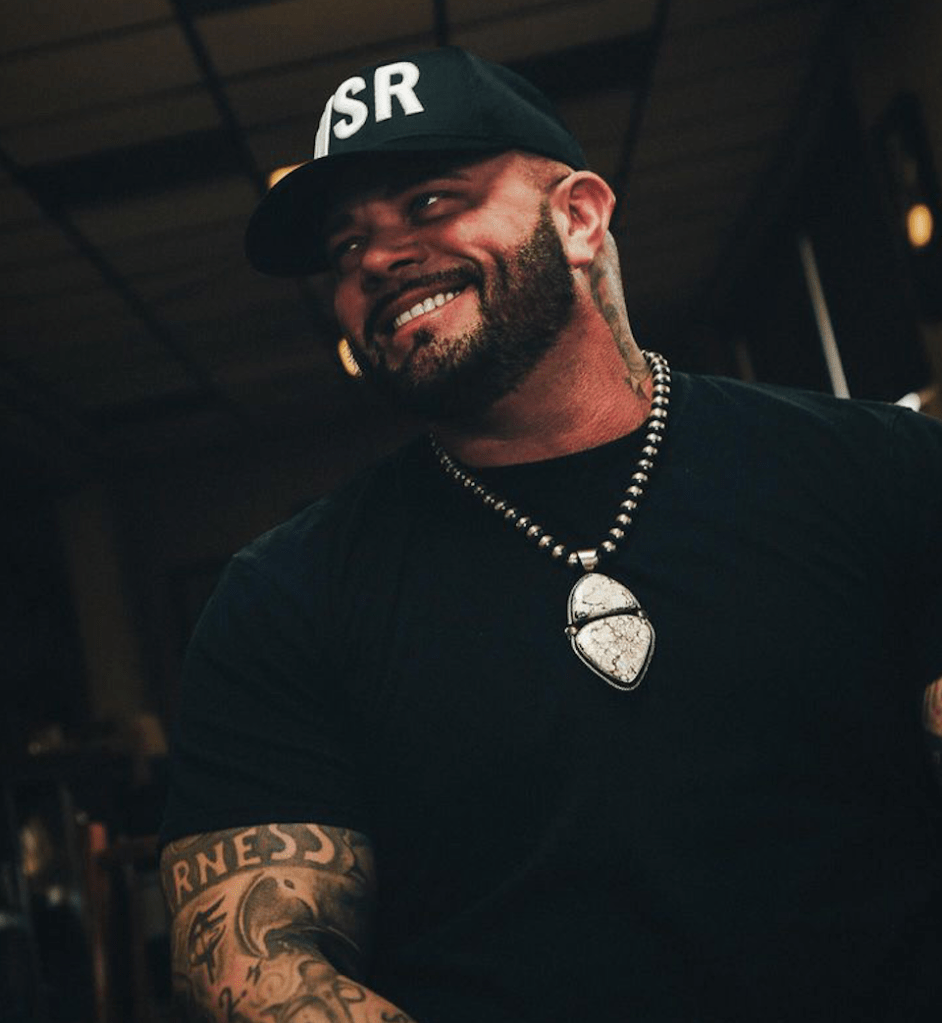
It is late evening, car motors are starting out in the yard and the heavy studio doors bang shut behind the last people leaving Soundville Studios in Nashville. Not Struggle Jennings, though. He leans back in his black chair, flashes a satisfied grin and presses play. The speakers boom vibrantly with the sound echoing in the soundproof studio, almost as if happy to hear all the new music that Struggle has in the works. His blue shirt is buttoned up smoothly over his trademark tattoos, ready for business. The room is illuminated by an eerie gloom, and you couldn’t tell if it’s coming from the dimmed studio lights or from the fire of inspiration that burns in the rapper’s eyes. Although rapper is not quite a sufficient description for Struggle Jennings anymore, as the music coming out the speakers right now is – country music.
While his latest album release “El Camino” is not even four months old, Struggle Jennings is already perfecting and polishing another country album to be released at the beginning of next year – pre-emted by the release of a single with his long-time best friend, rap colleague and rising star Jelly Roll, called “Only God Knows”, in January. “I’ve been cutting and writing and recording in the studio 16 hours a day for the last two months”, says Struggle, overflowing with inspiration. Not only is he working on several solo albums at a time, but also on a fifth “Waylon and Willie” album together with Jelly Roll, and producing albums for all the upcoming artists signed to his label Angels and Outlaws. Although a rapper through and through, his transition to country is not quite as surprising as it seems, given the fact that his music has always been country-infused. And, of course, that he has a whole country legacy to carry on, with his grandfather being no other than Waylon Jennings and his uncle Shooter Jennings. “The idea to do country really started twenty years ago when I told Jelly Roll, one day I´m going to have gold teeth singing country music. And the older I got and the more shit I went through, the more in love I fell with country music and the stories, the wholesomeness, realness and authenticity of it”, Struggle says.

“I love rap, and I’m never gonna quit rapping” – he also got another rap album in the pipeline, he reveals en passant – “but there’s only so much you can rap about once you become a 40-year-old man with a bunch of responsibilities. You overcome all the shit that you rapped about”, Struggle explains. “From being in the streets and being in a gang and going to prison, all the stuff that I rapped about for all these years – I overcame that. And then I got out and I rapped about overcoming it. Rap spoke to me most because of my environment and what I was going through. It was an outlet for me to tell my story”, Struggle says. “But country has always the backdrop of my life and my upbringing. And now, the content hasn’t really changed much. I’m still singing about the same things, heartbreak, the struggles and pain and battles that I deal with on a daily basis. This transition to country was something I always wanted, but I was always scared to do”, he says. But over the last months, he feels like he has reached a peak where he has maximized all he can be as a rapper. “Nobody can Struggle Jennings like I can. I feel like I have reached my full potential of what I could do as a rapper, and diving into singing has opened up a whole new journey.”
“Fall in love with the journey and just soak it up and and look at every obstacle as an opportunity to learn and grow and become something new.”
Struggle Jennings
That means Struggle Jennings also had to work on his skill and talent as a singer, from the Monte Carlo album, where he tested out his abilities, to El Camino, where you can hear the progress, to the songs that are now in the works. “I want the listeners, the fans and supporters to hear the progression and growth. And it’s only going to keep getting better, because I’m a student forever, in all walks of life”, Struggle says. “I found that the key to life is falling in love with the journey. It’s not really about the destination – are you going to get to the top of a mountain and just sit there? What’s fun in that? You want to keep climbing, you want to keep trying new things, and you want to, in the good and the bad, fall in love with the journey and just soak it up and and look at every obstacle as an opportunity to learn and grow and become something new.”
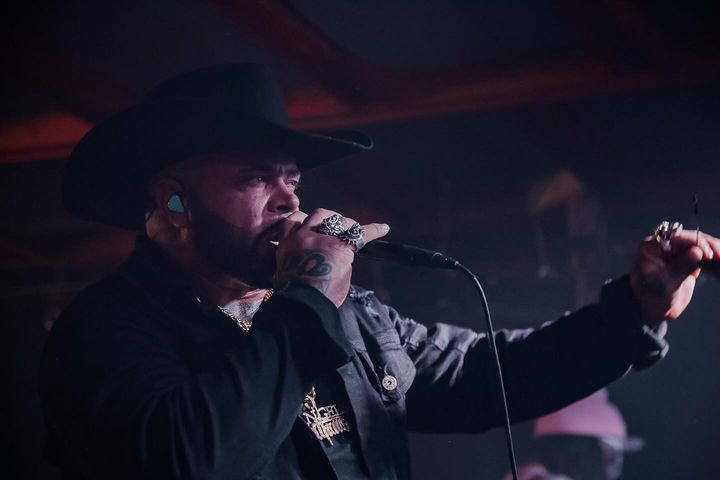
To learn a new musical style and navigate a new genre has also re-awakened the joy in making music and testing out all kinds of new things in the rapper. Now more than ever, he enjoys the fun of being in the studio, just like in his first days of hip hop. “I feel like the passion for the music sometimes gets jaded after years. You start to wear the polish off when you’re just beating yourself up, and you’re out there touring 260 days a year. This record does great, and then the next one doesn’t do good, and you’re wondering why that record didn’t do as good as the last one. Artists will really beat themselves up over that. And now I’m in a place where I don’t give a fuck. I just love what I’m doing so much. I literally walk out of a 16-hour day in the studio and say, thank you, God, thank you, for giving me an opportunity to do this, to pay the bills, and to do what I love to do. And I feel such a bright fire right now that is so fulfilling.”
The new direction Struggle is taking in his music inspires countless fans – and once in a while sparks a few online haters, too. “I see comments sometimes from haters or fans that don’t like the way my voice sounds. But I just take it, and it gives me fuel to keep getting better and keep striving and keep doing what I love to do and prove them wrong.”
“I don’t talk about my tragedies as much as I do about triumph. But I sprinkle the tragedy in there, so that they know that I’m just like them, going through the same things.”
Struggle Jennings
Embracing country music, for Struggle, is more than just a stylistic turn. It also means embracing his family history and legacy, and accepting what has been bequeathed to him by the name his family bears. “Waylon Jennings was my grandfather, but he was more like a father to me. My dad was murdered when I was ten years old, and Waylon stepped in and took that position as my father and father figure. I ran from the last name for a long time because I didn’t want to be in the shadow. But when I came home from prison, it had already stuck”, Struggle reminisces. “Then, my uncle, Shooter Jennings, said, use the name, man. I like it. It’s paying homage to him. And Waylon would really love that. So far I’ve done really well at not sounding like him, not following in the footsteps and in the trail that he blazed. Staying firm and standing strong in the morals and values that he taught and the things that he stood for, but being my own artist and my own person.”
Starting in October, Struggle Jennings will go on tour with his last album El Camino. “El Camino means so much to me. There are so many songs on that record that will forever be my favorites and some of the most meaningful things that I’ve ever written. Those songs are so true and raw in their form. Each album that artists create is a glimpse into a season or a time period in their life, whatever they’re going through at that moment. There is a lot of ups and downs and highs and lows in Monte Carlo, and then in El Camino especially”, Struggle says. “Some of these songs are so rowdy and and fun, and then some of them are painful. And that’s because every day is different, especially after all the tragedy I’ve been through and continue to go through. Every day I’m still getting a call that somebody else who I know died from an overdose. Just now, when we were listening to my new music, I got a text that a friend of mine just passed away. It’s constant, and all the stuff that we go through, we put it in the music. But that also means I’m not gonna go out here and act wild and do something stupid, because I’ve got this form of therapy right here. So I’m gonna write a song about that and get it off my chest, and then put it out there so that it hopefully helps others that are going through it”, Struggle says. “The last year and a half were a really rough time in my life. Of course, we made it through it. But a lot of this pain the fans and listeners don’t get to see. They only see what we post. And I don’t post that much of it, just because I’m here to inspire and to motivate. So I don’t really get on there and talk about my tragedies as much as I do about triumph. But I sprinkle the tragedy in there, so that they know that I’m just like them, going through the same things.”

The El Camino, in itself, signifies an important part of who Struggle Jennings is and came to be. “As the story goes, my mom and dad met at the skating rink in West Nashville, and one starry night, they made love in the back of his El Camino, and she got pregnant. I was birthed in the back of this El Camino. At the same time, El Camino translated means the path or the journey. That’s beautiful.“ Although his father died so early in his life, he contributed a major part of to who Struggle is today. “He came from nothing, and he really taught me the morals and values of what it means to be a man. One of the last things he told me was, it is your place on this earth to protect the women in your life. I was being raised by a single mother, and he embedded in me that you protect women and children at all costs. That my job is to provide, protect and carry a lot of things. He was the type of guy who, if it was snowing outside, threw some chains in the back of his truck and we’d ride around and pull people out of ditches who were stuck. He was one of them good old boys that had a big heart, and he passed that on to me.” Struggle Jenning´s mother, on the other hand, was the daughter of Waylon Jennings, and lived in Brentwood, in a big mansion. “Totally different from my dad, who came from nothing, from poverty-stricken West Nashville. They were from two completely different worlds, and they fell in love and had me.” El Camino, in that sense, stands in for how everything began, and how far Struggle has come since then. “That album really embodies the entire journey from start to finish.”
What would his father say if he could hear the album? “I know he would love it because it’s good music, and he liked good music”, Struggle smiles. “I wish he could. I hope one day I get to play it for him. I think he’d be proud, and I think that he would probably apologize for leaving so soon. We’d probably cry like babies together”, Struggle says.
“My Grand Ole Opry debut landed on my last day of parole, so I walked out on the Grand Ole Opry stage into that circle like it was the end of one chapter in the beginning of a new one.”
Struggle Jennings
His father would certainly have reason to be proud of his son. In June, Struggle had his debut at the Grand Ole Opry in Nashville – the iconic country music venue with cult status which offers its stage only to the most famous and refined country artists. As Struggle tells us, Jelly Roll was in charge of inviting Struggle to play the venue. “I was at the ACM Awards, and Jelly walked up to me, bawling, crying his eyes out. And I asked, what’s going on, what’s wrong? I thought somebody had died. And then suddenly the cameras come over, and Jelly says to me, the Grand Ole Opry has asked me to give you your invitation to play”, Struggle tells with smiling eyes. “I was completely blown away and didn’t know what to say. And when I was away from the cameras, I just broke down crying.” For Struggle, the Grand Ole Opry debut was not only an immense honor speaking to the quality of his music, but also a powerful wink of the universe: “My Grand Ole Opry debut landed on my last day of parole, so I walked out on the Grand Ole Opry stage into that circle like it was the end of one chapter in the beginning of a new one”, Struggle says and smiles widely.

In the face of all the growth and progress he has come to stand testimony for over the past years, Struggle also sees it as his responsibility to uplift and inspire others that suffer in similar trenches as he did. As part of a prison outreach program, Struggle visited several prisons, among them the one he did his time in, and played his music. “There were four or five people in there that I’d been locked up with. It was really surreal to be able to go back in and not only give my testimony but to tell them it’s possible to start again. Hey, I was here eight years ago, a bunch of y’all were in here with me. And I’m showing you, whatever you want to do, you can do it. You got to get out, and you can’t take no for an answer, and you got to change your ways, and you got to walk that straight line and work your ass off and have faith and move in the right direction, and you’ll get where you want to go.”
“I get up every day and I strive to be just a little bit better than the previous day. I want to be the best fucking version of myself.”
Struggle Jennings
In that sense, Struggle Jennings, in his whole being as an artist and as a person, stands in for change, and for transformation. That overcoming is possible, through strength, and through hard work, and through music. “It takes having faith and believing in yourself and and knowing that I don’t have to be the same person that I’ve always been. I don’t have to make the same decisions. I’m not perfect. I still make mistakes. There are times where I’m doing incredible, and there are times where I drink a little bit too much, or I let stress and life beat me up. But I pick myself back up and I say to myself, hey, this isn’t who I want to be. And I get up every day and I strive to be just a little bit better than the previous day. I want to be the best fucking version of myself.”

More than anything, Struggle Jennings is proud of his kids and the amazing people they have grown to be, and how well they are doing after all the suffering they had been put through in their early years. “It’s a danger saying it is what it is, because it’s not. It is what you want it to be and what you make of it. And everybody can make it whatever they want it to be, if they just push through and don’t let their circumstance slow them down. Don’t blame things on your conditions. Change your fucking conditions. There are ways to change everything”, Struggle is convinced. “Like so many people, I was victim of that saying. I got caught in the trenches for so long, thinking that where I was from, what I was going through, all the poverty and joblessness and drug trade, were all there was for me. The one truth was, I can do whatever I want to do. I just got to put the work in. I gotta learn, I gotta grow, I gotta work”, Struggle says with conviction. “And I gotta believe that it’s possible.”
 The Wrapper