Ears up everybody – mid of June is approaching and it brings what might be the best hip hop album of the year, or at least one of the most precious pearls of sound you have heard for a long time. Killer Mike is the name that mightily covers a man who can call for anarchy and shed tears for his mother in one conversation. A man of extremes, maybe, but also the most woke-up, witty rapper the industry has seen for a while.
By Katharina Moser

The torrid sun burning above, the sky half-blue as a faded polaroid picture, the dense shrubs of the Southern hinterland tearing at the ankles – and in its midst a man running, gunshots echoing around him, tearing up the earth, and the man still running, eyes fixated on a distant but unswaying goal. This is the visual setting of the song “Run”, one of the first singles from Killer Mike´s new album that is about to be released in June this year. But more so, this is how a Black man imagines himself in contemporary America. After over ten years, “Michael” is the first solo album of the appraised rapper from America´s South, member of the infamous crew Run the Jewels, and if Mike has been known before to be as much a political activist as he is an artist, with the new album he has proven himself to be one of the most thoughtful and cultural commentators today´s rap scene can offer.
“I got the album of the year, that’s how I´m feeling. I got an amazing piece of art to share with the world I spent two years of my life creating. And I´m very anxious for the world to hear it”, says Michael, with a heartfelt smile. It is just a few days from the album release on 16 June and he barely finds enough time for all the media whose interest has exploded since the album announcement. “To tell my story like this, at this time, has been my ultimate goal.”

The songs on the album are suffused with his personal life experiences, with the spirit of community he grew up in, recollections of life as a rapper in the American South. “Michael” is as much a personal autobiography as it is a testimony to a collective experience Black men make in American society. But as Mike is careful to point out, his album is less about race and skin color than one might assume. “Even more than just being a Black man, I have a radically different look on Black masculinity. I grew up in a purposefully all-Black neighborhood that was full of working-class Black people, which we were, middle-class Black people, which some of my friends were, and rich Black people”, says Mike. He was born to a 16-year-old mother and a 19-year-old father in Atlanta, Georgia, in 1975 and raised on Atlanta´s Westside by his grandparents. “Atlanta´s Westside is a totally Black world. I didn’t have three white teachers in my whole life. So I´ve never had the time to develop an insecurity, I´ve never had time to think that if I worked hard enough that somehow I shouldn’t be confident enough that I could do it”, explains Killer Mike, who started rapping around the age of 20 as a protégé of the pervasive hip hop duo Outkast and in his rookie year won a Grammy with him. “Of course I knew that life wasn’t fair. My grandfather taught me that when I was about seven years old, and at that point he was 62. But I grew up in the western enclave of Atlanta. I grew up feeling and being empowered. What I realized is that being Black but having the confidence actually helps me better relate to people who aren’t like me.”
In that sense, the album´s sociopolitical background is not only that of race, but also of class. “Meaning the working-class man, whether he in Germany or the UK or in Switzerland, in Africa or in Japan, the working-class man and the women that love him, be it his mother, his lover, his woman, his children – they have a unique experience that this album connects to”, Killer Mike makes clear who has worked with household names like Jay-Z, T.I., Young Thug, Future or Andre 3000 and has starred in his own netflix show.
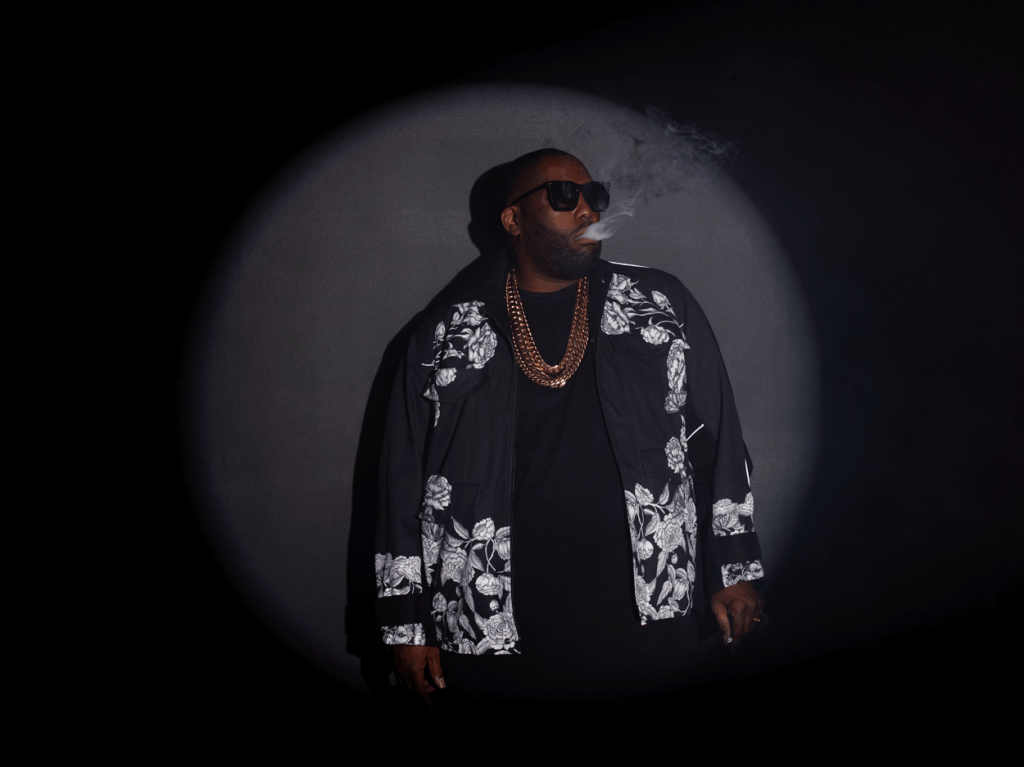
For Mike, his life has become increasingly intense over the past years, but he wants his life experiences to be seen not only as the experience of a Black man, but in a larger, universal framework of the simple man. “I want you to understand that as a visionary I connect with human beings at the base level. And every day is about it, it is about our reality. I´m glad that people feel it in my music. As a Black man, for a Black man, and beyond that. For the working-class men and women”, Mike states. “My goal was to make a work of art that you connect to on some level.”
Killer Mike, with his political lyrics, is a political rapper just as much as an activist, with a long history of advocating for Black liberation, justice, economic uplift, and an end to police brutality. In the song “Run”, which also features actor Dave Chappelle, he repeats that the race for freedom is not over. Chappelle says: “One thing about being a (Black man) in America, it´s like storming the beach in Normandy. A guy gets popped, another guy goes, another guy falls. You just got to keep going … Ain´t no rhyme or reason why it´s not you on the ground, but as long as it´s not, you better keep your feet underneath you … Ain´t no time to be scared. But even if you are, what fucking difference does it make, run … You´re just as heroic as those people that stormed the beach … You´re a leader, lead.”

Yet, Mike´s political commitment is confined to a narrow political realm: “I don’t have an opinion on the big thing”, Mike says, meaning federal state level and presidential elections. “Because the big thing is political theatre. The oligarchs get the proletariat to choose sides and we can pick them against one another. The state will still cut whatever financial deals they have to cut to keep the oligarchy intact.” In the face of this deep distrust towards a federal government that, in Mike´s eyes, does not speak for the people anymore, he calls to pay attention hyperlocally. “Hyperlocal is all I´ve ever been focused on. Looking at what council people are doing, the judges, the prosecutors. What is my mayor doing? What can I do as a citizen to help my neighbors left and right? I don’t believe that answers are coming from top down. I actually believe that answers get dangerous when they come from top down because the top is a small set of people“, he stresses. “In the United States we have an oligarchy. We have a political class here that can trade in the stock market, make millions of dollars, never have to give up their seat, win in elections, and they have the power and influence over millions of people who they never truly have the answer to.” Instead, Mike believes in very small, very involved groups of people on local levels enacting change and policy reforms that can be imitated at other local levels. To illustrate his point, Mike takes the example of a policy reform that was recently enacted on state level in Georgia: a program in which a first-time offender would not have to go to jail directly, depending on the crime. They would get an opportunity to have one year to get employed, to finish schooling, to do something that put their life on course. “That’s the type of politics that I´m talking about. I don’t give a fuck who the president is because we have been fucked over by a lot of parties.”
Mike also defends his criticized decision to meet the state governor, who won the election against a female Black candidate that Mike had originally supported. “I´m still a citizen of the state, and he is still my governor, my salary helps to pay for him. There is no way I´m not going to talk to the governor if I get chance to speak with him on issues of crime and violence. And even though we don’t always agree on how we can help, that he helped implement this program was amazing.”

Being so outspokenly political also comes from his own experience of racism and injustice Killer Mike has had in his life. “My grandparents were very adamant about racism when we travelled to other states in the South. We didn’t stop at restaurants because they came from the old school where it wasn’t safe to stop at restaurants”, he says. “My grandparents insulated me from the bullshit, but they couldn’t insulate me from the racism. What I knew, however, was what all my heroes and villains from the local community looked like: the people my grandfather argued over with my grandmother who were good or bad for our community used to be both Black. So I understood that race in this country is used as a form of class”, Mike is convinced. He is angry that this seems to be a global issue: “No matter what system one is in – be it a communist, a socialist, or a capitalist system, usually the darker people or the people who are in the minority are in the bottom class. And as fucked up as that can be, I also had such tremendous opportunity, not fair, not right, not always just – but the opportunities that I´ve been given and that I´ve taken advantage of have helped me to serve my race”, Michael is sure. “And that is my duty. How can I be the best possible version of Michael to help create an environment or keep an environment going that creates more Michaels? And I think that ultimately, for Black people in America, the best thing we can do is to take very good care of our race.” He recalls the advice his grandfather gave him: “Firstly, take care of yourself. Don’t embarrass your name. Don’t have a reputation in your community that is not upright. Try your best to be a man of your word. Next thing, don’t embarrass your Mama´s name, understand that you are the branch of a rooted tree. Don’t do things that bring shame to your family. And lastly, don’t embarrass Black people”, Michael remembers. “The best Black people can do is take care of ourselves, take care of our people. Stay hyperlocal in terms of the political. We need to figure out what our real goals are.”
Music, in this context, can be an essential catalyst for change: Killer Mike, for example, has had a hard time after the death of his mother and his grandmother, but to record the song “Motherless” on the new album, a song dedicated to his “mommas”, finally helped him to express feelings bottled up in him for years – feelings that thousands of people could relate to when listening. “Music is art and art is supposed to transform your soul. Whether I sit in an art museum and look at a beautiful work of art, or sit alone in my car and listen to the “Motherless“ record weeping because my momma loved me and I miss her, art is supposed to make me feel something, to be transformative. I feel like this album, more than any other album I´ve made as a solo artist, is something that people will be affected by at such a deep level that it fundamentally changes parts of who they are. It’s a generational statement.“
“This album is something that people will be affected by at such a deep level that it fundamentally changes parts of who they are. It’s a generational statement.“
Killer Mike
With the album, Killer Mike seeks to create impact on individual-emotional as well as communal-political level – a progress-oriented form of hip hop that reminds of rappers like Tupac or NWA who used the genre as a cultural form for giving a voice to the marginalized. “I think the universe has a funny way of leaving us nuggets of inspiration. You know, the album was supposed to drop on April 20, my birthday, and it ended up dropping on June 16. Ironically this not just Tupac´s birthday, which is a beautiful thing to remind us of what he did to help humanity understand itself, but its also the anniversary of the Soweto uprising in South Africa, in which young people pushed back against a brutal Apartheid system. And I´m proud to be part of a global struggle, not only for the United States, but pan-African. To know that those things happened on that day give me a warm and fuzzy feeling”, Michael says. “Do I have the obligation to say something on every song? No. Do I have the obligation to say something when it’s the right time? Absolutely. That’s been true of me. That’s been true of Future, of Eminem, of Outkast, of NWA. We are not just a tune to be used by politics and politicians, we are at times the voice of the proletariat that they are not allowed to have, in newspaper or on television or in public discourse, although I highly respect those platforms. We give that voice and I´m proud to be part of an artform that enables that.”
The song “Run” is an embodiment of this cultural history. It frames itself in the tradition of the civil rights movement, places the hip hop genre at the interface of past-century political activism and contemporary postmodern cultural expression, envisions hip hop as the continuation of the Black freedom struggle. In that sense, the song can be taken as a call for a movement for further change. “I think the movement would need to be a truly anarchist movement for which, like (19th century socialist activist) Lucy Parsons said, there should be years of learning and studying. I don’t mean anarchy as in chaos, but anarchy in the sense that the human being should always be more important than the state. The state should never trump the human being”, Michael says. “The movement should be one where we as individuals become more in tune with what it means to be a human being, figure out how to help human beings become better critical thinkers. Because when you do that, this is eventually going to lead to an overthrow of the oligarchy. It´s going to lead to an overthrow of the state. That doesn’t mean radical revolution on the steps of the Capitol, what it means is that people say: we absolutely refuse. What is going to happen if all the people in the world absolutely refuse to pay taxes? What would happen if every boy capable of going to war says to the state, I will not go to war? Send the riches. Send their sons and watch them kill each other instead”, Michael argues. “So when the people are taught to think critically, when we as the people lose the fearful imagination that the state somehow is bigger than you, then they have lost. It´s that simple.” Yet, for Killer Mike a change of thinking needs to prelude reforms in the political system. “It will never change without changing people´s minds. You can only change a mind by properly educating. And with educating I do not mean indoctrinating. Education is asking the question: Why. How. What. When. Where.” Mike, as he has repeatedly made clear, believes in America – but also that something must and can change. In this context, the influential Spin magazine admiringly described Mike’s song lyrics as “matter-of-fact musings”, which some representatives of the progressive and woke movement would consider a little too “Malcolm X” for modern race theory – but might perhaps be necessary for noticeable change.
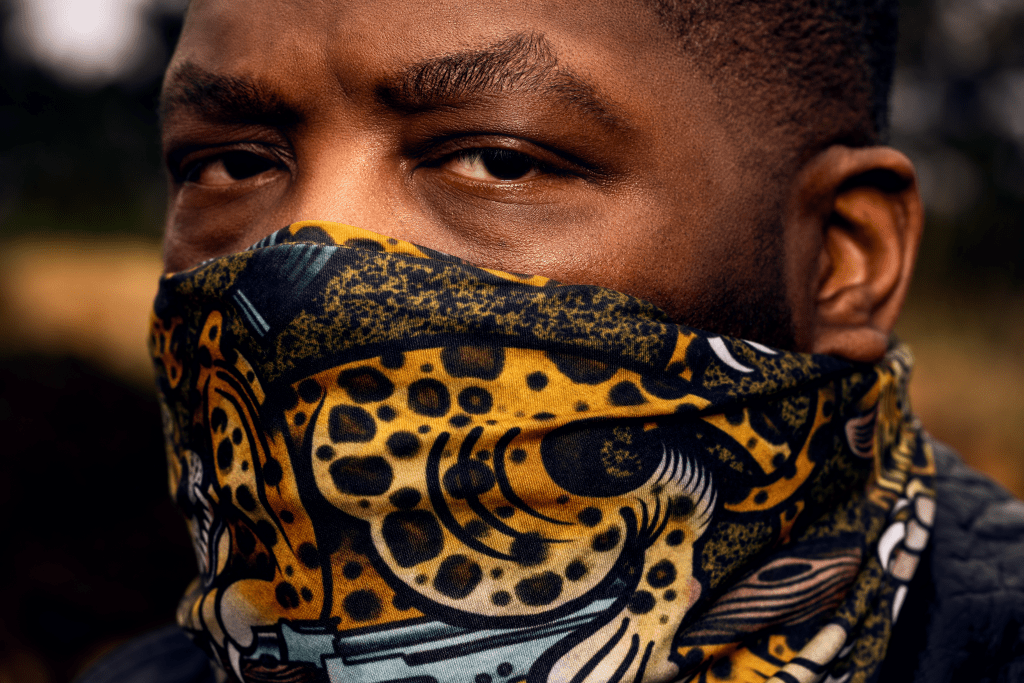
One would assume that Killer Mike, who actively supported Bernie Sanders in the 2016 and 2020 elections and advocated for his campaign, is highly excited about the presidential elections in 2024 that the whole world is looking towards with a bit of anxiety. But no. “I don’t have any thoughts on the election, absolutely zero. I´m going to take my vote, and I will continue to work my ass off politically on a hyperlocal level. But I have no interest in calling in on that soap opera where two geriatric rich white men are supposedly fighting on behalf of the people in our country. If there was a candidate that would step up in the manner that Sanders did, I would be inspired to help that candidate. If that candidate does not show up, I have no interest in talking about this theatre”, Michael says drily, with a hint of frustration.
“When we as the people lose the fearful imagination that the state somehow is bigger than you, then they have lost. It´s that simple.”
Killer MIke
The album “Michael”, however, should not be reduced to its political implications. It is also an intricate mosaic of musical styles uniquely blended into each other. “Somebody recently came up to me and said that this album is actually blues music. I said, what are you talking about, I am a rapper. But he said, you are doing exactly what blues is doing, you´re talking about the trials and the triumphs of the regular man”, Killer Mike says with enthusiasm. Mike grew up with blues music as that was what his grandparents listened to (“that´s what old people listened to”, Mike says and laughs). “And I remember my grandfather singing songs that would make my grandmother blush because she was a church girl. This album is the weird balance of the blues sound that my grandfather embraced, and the gospel that my grandmother embraced. And it’s a beautiful hybrid, it’s a homecoming for me”, Mike says, and his voice starts to crack.
“You are doing exactly what blues is doing, you´re talking about the trials and the triumphs of the regular man.”
Killer MIKE
He becomes quiet for a second. “I left church as a teenager, in search of something, you know. I didn’t know what I was in search of. And then, after all these years, you realize, it´s always been in you.” Michael Render´s voice breaks, and a tear starts running from his eyes. “The God that you were looking for has always been in you. You know, my grandmother said, you can´t run from God. And my wife tells me the same thing. And you start to understand that the reason you were running from the church, or the normalcy of your life, or a family, was that you are an ambassador. You are an ambassador on behalf of your family, your community, of your fucking race, and you have a job to do. To show people that you´re simply human beings.” “Killer Mike”, gangsta rapper, who as a young man got himself into drug dealing and found out again, giant with tattoos, wipes hot tears from his face, and it feels like the air is vibrating from this moment of deep expression, of knowledge finally received through a long journey of pain. “It doesn’t matter where you come from. We are sharing this human experience. And it´s my job to do what my grandfather asked. To take care of myself, to keep his and my grandmother´s name respectfully, and to keep black people in the respectable conversation of human history. That’s it. I´m only here for this long. I´m not that important. But if I do this right, it will provide fertile ground. And that’s it for me. If I had understood this when she was alive…” Michael Render breaks off. In this moment, I am not talking to the Killer Mike. I am talking to a fellow human being who is willing to reveal his deepest pains in order to make you understand what this music is about. That he has poured his heart into it. That the album is more than just tunes, more than a story. That it’s a piece of the fabric of his soul, but not his only, but yours too. “This music is a homecoming. And I´m saying… I´m getting it, momma. I understand. I got you. I truly get it now. I truly get it now why she wanted me to be a good man. I truly get why it was important that she helped me understand that before she got out of here. And her daughter, my mother. My grandmother taught me about this, but even my mother – they said, I only have one boy, so you have to be a good man, because I don’t get another chance.”
Mike wipes of his last tears and shows a smile again. “So my job, musically, was to come home. And to show people that behind the superhero of Killer Mike, one of the greatest most kick ass rappers in the day” – he grins mischievously, the Killer is back – “that there is just a man, a 9-year-old boy, had by a 16-year-old girl, raised by his grandparents. I´m just a man, I feel the hurt, I feel the pain. I feel the eagerness and the ambition and I have to balance all this out just as any man in the world will do, together with the women who love him. My sister, my wife, my former lovers. Everybody is cheering for that man to become the best version of himself. That somehow this 9-year-old boy came up with that crazy dream and took a journey into manhood. So that throughout the album you get a man who, with all his trials and his triumphs, has left a piece of art that hopefully be regarded as the generational statement it is.”
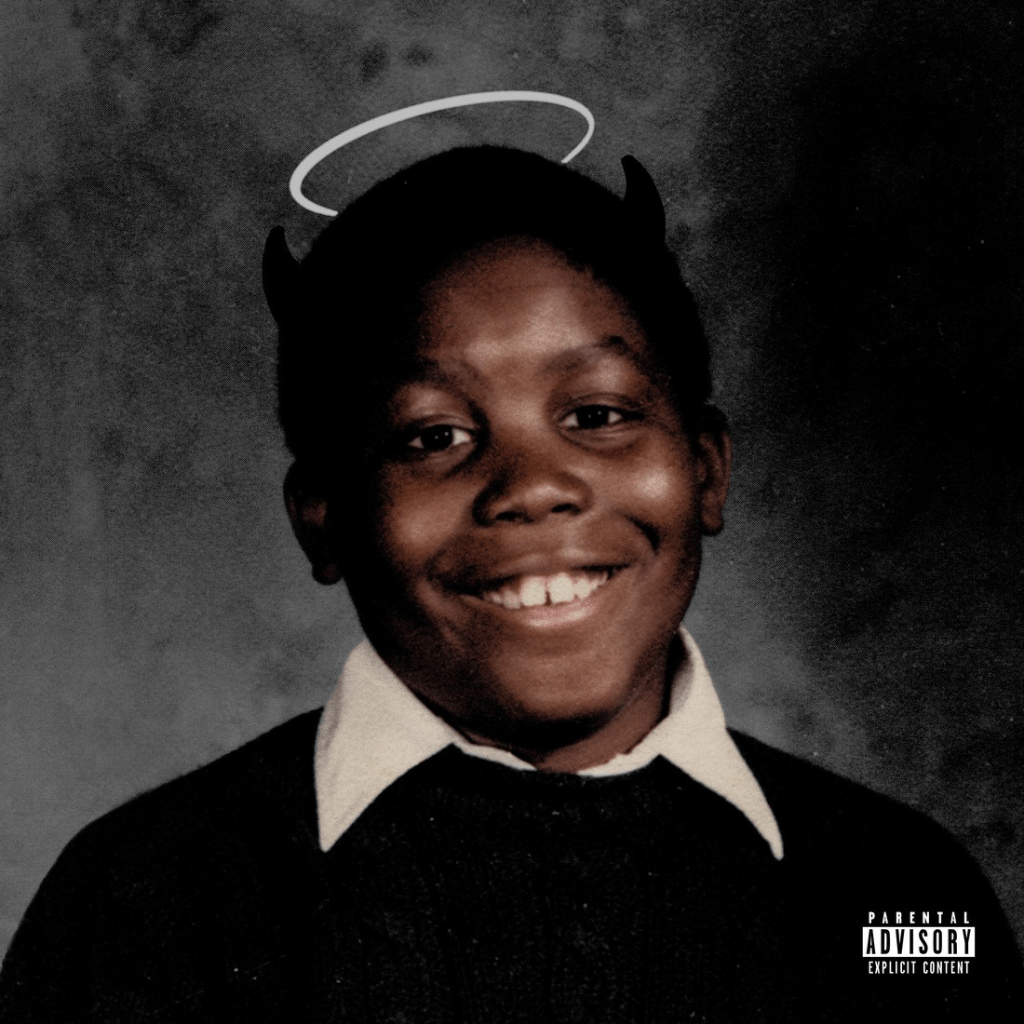
To describe the album “Michael” would be to shortcut it. A piece of art can, of course, never be transcribed or synthesized, it needs to be received. So with all that the piece of art entails, Killer Mike and me, at the end of our conversation, agree on one more thing: Listen to the album from start to finish – you´re going to feel it. Why use, after all, so many words for what the album can express in 50 minutes?
“My life has been a journey of a lot of people pouring into my cup. And this cup is running over with great music and great intent for other people to fill their cups”, Mike resumes. “I´m very happy that the music is felt.” And there is Mike Render, laughing heartily, calling out to his wife in the next room to share what we just talked about. A man who has quit college to pursue his dream of being a rapper, who has lost his trust in big government but found his faith in music, who believes in change with human beings as the only and absolute measure, who calls for anarchy to bring down an unjust oligarchy, and who sheds hot tears for the ones he loves.
Meanwhile, in the music video to “Run”, the Southern setting slowly fades into the background, the man running freezes to a heroic statue, and the picture fades into a painting hanging on the wall of a museum – fixating the moment where a Black man running becomes a piece of the past. Giving hope that one day the race for freedom is history, its victory is reality. And we already know what the soundtrack to this much needed victory is going to be.
 The Wrapper